AI agents can build your next hundred pages. We build the agentic website on Webflow they're allowed to touch.
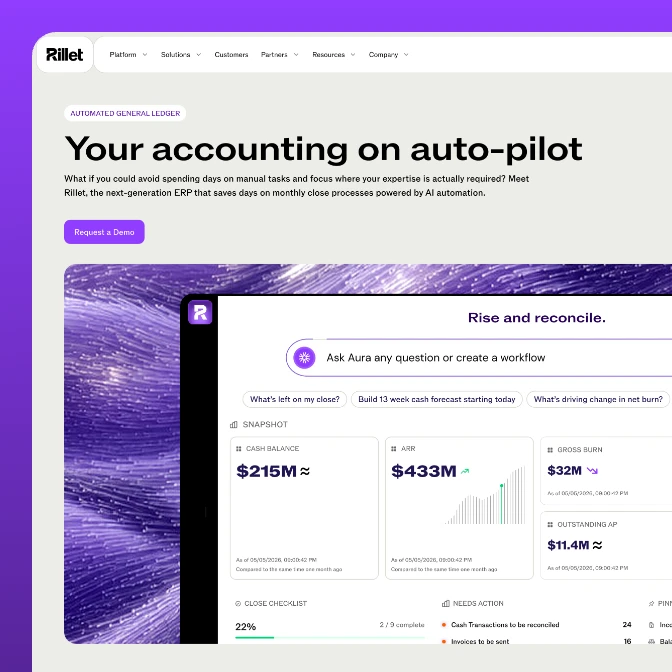
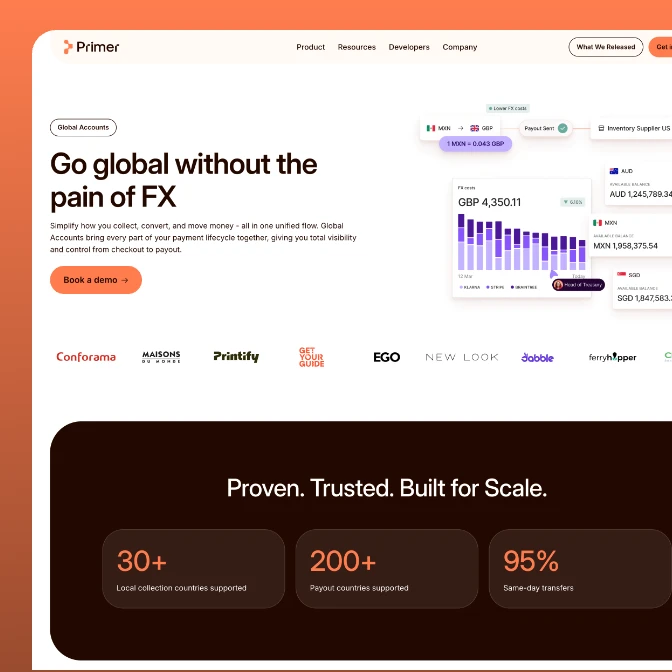
We design and build Webflow sites that B2B and SaaS marketing teams run with AI agents. Agents draft pages through Webflow MCP inside your design system, on branches and under your roles, and a person on your team approves what ships. The same site is structured so ChatGPT, Perplexity and Google AI Overviews can read and cite it. Webflow Premium Partner, 250+ projects, trusted by Rillet, Primer and Timefold.

B2B teams that run their Webflow sites with us



















Most Webflow sites weren't built for AI agents, on either side
AI now reads your site for your buyers and, if you let it, edits it for your team. Most Webflow sites were built for people clicking around the Designer, so agents either can't use them or use them badly.
This is rarely a tooling problem. Connecting Claude to Webflow is the easy part. What the agent finds once it's connected decides whether it helps or makes a mess.
Every new page still waits in a queue
Landing pages, CMS updates and localization passes sit behind one developer or one Webflow expert. The campaign launches when they get to it.
Agents invent styles instead of using yours
Inconsistent classes, one-off sections and no written rules leave an agent guessing. It guesses wrong, usually in a slightly different shade of your brand blue.
AI search can't find your answers
Pricing in images, no schema, facts buried in unstructured CMS fields. ChatGPT and AI Overviews answer your buyer's question by citing someone else.
Nobody can see what the agent changed
Shared logins, no branches, no review step. One bad publish and the whole team quietly switches AI off again.
Agentic website development on Webflow, in nine parts
An agentic website is a site built so AI agents can draft, build and update it safely, with people approving what goes live, and structured so AI engines can read and cite it.
On Webflow that means two halves, built together: a site your team can operate with agents, and a site answer engines can read. We deliver both, in-house, on every build.
A design system agents can reuse
Components with props, slots and variants, on one class system, so an agent assembles pages from your parts instead of improvising. It's the same discipline as our design systems work.
A CMS agents can't misread
Descriptive field names, one job per field, and facts like pricing and specs in text fields rather than images. Agents fill it correctly, and search engines can read what they filled.
Agent Instructions
Your brand voice, design rules and legal limits, written as short rules agents read before they act. They apply to Webflow AI and to third-party agents alike.
Webflow MCP, connected and scoped
We connect Webflow's official MCP server to Claude, ChatGPT or Cursor, scoped to the sites, collections, pages and locales each person actually needs.
Roles and approvals
Custom roles for people and agents, plus a review step, so nothing an agent drafts goes live until someone on your team publishes it.
Branches and an activity log
Agents work on a branch, never on the live page. Every MCP action is logged with when it happened, who triggered it and what it changed.
An AEO layer from day one
Schema on key templates, llms.txt, and question-shaped content, so answer engines can extract your facts and cite you. More on our Webflow AEO and AI search work.
A Claude plugin at handover
Every site ships with SKILL.md and DESIGN.md, packaged as a Claude plugin your team installs, so they can run and extend the site with Claude from the first day after launch.
AI-referral tracking
Analytics that separate visits from ChatGPT, Perplexity, Gemini and Claude from everything else, so you can see whether AI search is sending you buyers.
Agentic Webflow site vs AI website builder vs traditional build
The short version: an AI website builder gets you a first draft fastest, and a traditional build gives you control but every change waits on a person. An agentic Webflow site gives your team both, because agents do the volume work inside a system you own and people approve it.
| Agentic Webflow site | AI website builder | Traditional Webflow build | |
|---|---|---|---|
| What it is | A Webflow site built for agents to operate under governance, and for AI search to read | A tool that generates a site from a prompt | A Webflow site built for people to edit by hand |
| Who builds new pages | Agents draft, your team approves | The tool generates, you edit | Your team or a developer, by hand |
| Design system | Yours, built for agents to reuse | The templates the tool ships with | Yours, if it was built well |
| Approvals and audit trail | Branches, roles and an activity log | Varies by tool | Roles, but no agent activity to review |
| Readable by AI search | Schema, llms.txt and structured CMS from launch | Depends on the template | Only if someone added it |
| Speed to a first draft | Fast, once the system exists | Fastest | Slowest |
| Best for | Marketing teams shipping pages every week | A prototype or a small site | Sites that change a few times a year |
How we build an agentic website on Webflow
Design and Webflow build take 8 to 10 weeks, or 10 to 12 with a new brand. The agent layer and the AEO layer are built inside that time, not added on top. We run agents on our own builds too: on a recent B2B site, our agent pipeline finished in one week a Webflow build that usually takes four to six. Here's what happens, and what you get at each step.
Results our clients reached
Real business milestones the teams we partnered with hit during the engagement. The work is ours; the wins are theirs.
$200M+
Raised at a $1B valuation. All three rounds closed after our redesign went live.
$175M
Raised while scaling its global payment infrastructure.
$13M
Raised while building its AI planning platform.

$73M
Combined value of the SMSBump and NitroPack exits.
Average partnership
3+ years
Average length of a client partnership. People stay when the work keeps shipping.
7 years
Across strategy, branding, and product, 2018 to 2025.
AI portfolio
15+ companies
AI companies designed for, from first launch to scale.
Enterprise portfolio
10+ clients
Enterprise clients, the kind with procurement departments.
24%
Higher conversion rate after the website relaunch.
Products launched
10+
Software products designed and taken to market with our clients.
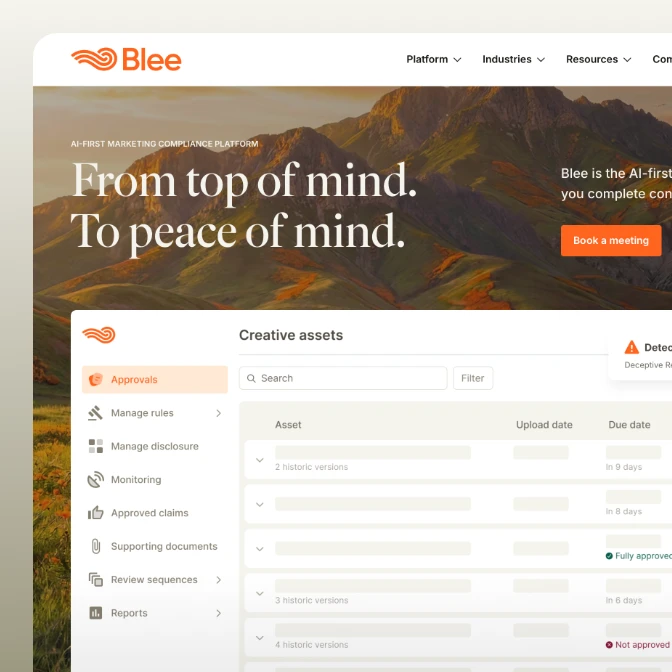
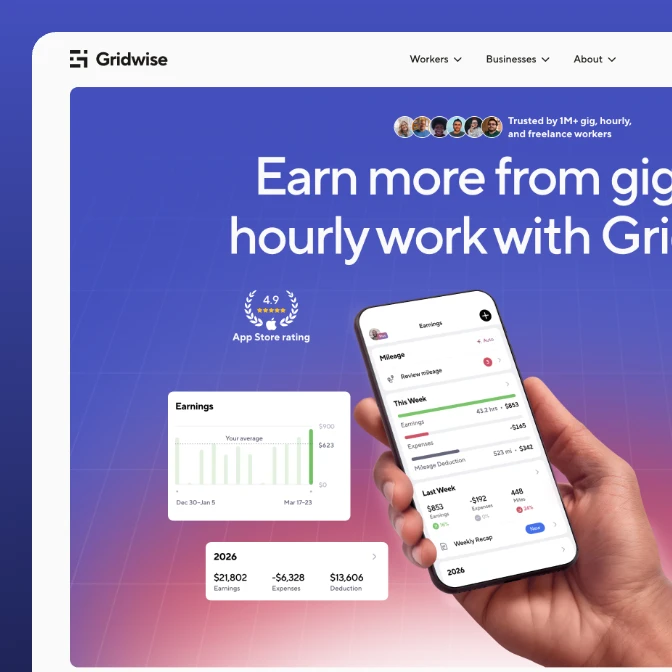
Large Webflow sites we've structured for scale
Agents are only as good as the system they work in, and the hard part of a large site is keeping page 600 consistent with page 6. That's the work behind our biggest Webflow builds: a 1,000+ page redesign and rebrand, and a 600+ page site in four languages. The same discipline now goes into sites built for agents to operate.
Who should build it? The honest version
Most teams weighing this work compare four options: a Webflow partner that builds the agent layer in, a typical Webflow agency, a freelance developer, or their own team. Here's where each one actually wins.
| StanVision | Typical Webflow agency | Freelance developer | In-house team | |
|---|---|---|---|---|
| Agent layer (MCP, instructions, roles) | Built into every site and tested before handover | Usually an add-on, if offered | Depends on the person | Possible, if someone owns it |
| AI search layer | Schema, llms.txt and AEO in the same build | Often a separate SEO vendor | Rarely in scope | Depends on the team |
| Design system built for reuse | Designed and built by the same team | Varies by agency | Often page by page | Strong if a designer owns it |
| Who runs it after launch | Your team and its agents, trained and documented | Often the agency | The site can stall if they're busy | Your team, while they stay |
| Where they win | Webflow, agents and AI search under one roof | Breadth across other channels | Lowest cost for small tasks | In the room every day |
Industries
we go deep in
We specialize where design and growth decisions carry the most weight.
Awards
25 awards from Awwwards, CSS Design Awards, and Behance. And since 2023 Stan sits on the Awwwards jury, which is rarer than winning.
1x SOTD + 1x DEV + 13x HM
1x Jury member

Awwwards: 15 awards in total. 1 Site of the Day (SOTD), 1 Developer Award (DEV) and 13 Honorable Mentions (HM). Stan Kirilov is an Awwwards jury member.
2 SOTD + 4 SK
1x ex. Jury member

CSS Design Awards: 6 awards in total. 2 Sites of the Day (SOTD) and 4 Special Kudos (SK). Stan Kirilov is a former CSS Design Awards jury member.
4x Featured in Web design

Behance: StanVision projects featured 4 times in the Behance Web Design gallery.
Frequently asked questions
Agentic website and Webflow MCP questions, answered.
What is an agentic website?
An agentic website is a site built so AI agents can draft, build and update it safely, with people approving what goes live, and structured so AI engines can read and cite it. On Webflow, that means a reusable design system, Webflow MCP connected under your roles, written Agent Instructions, and schema and structured content for AI search. It's a way of building and running a site, not a site an AI generated for you.
How do you check if a website is AI-agent ready?
Check four things: whether pages are built from reusable components, whether CMS fields are structured with one job each, whether agents get written rules and scoped permissions, and whether key facts sit in text with schema rather than in images. If any of the four is missing, agents will struggle to edit the site and AI search will struggle to read it. For existing Webflow sites we run this as an agent-readiness audit and hand you a prioritized fix list.
How do you make a website agent ready?
Fix the structure first, then connect the agents. Clean up the design system and CMS, write Agent Instructions, and set roles and permissions. Then connect Webflow MCP on a branch with one low-risk workflow, such as meta titles across your CMS items, and widen the agent's permissions only once you trust the output.
What is Webflow MCP?
Webflow MCP is Webflow's official Model Context Protocol server, which lets AI tools like Claude, ChatGPT and Cursor read and change a Webflow site: pages, components, styles, CMS content and analytics. MCP 2.0, released July 21, 2026, added design system support, Agent Instructions, branches, role enforcement and activity logs, and Webflow made it available to all users at no additional cost. Our Webflow MCP guide covers the setup in depth.
Does Webflow have an MCP server?
Yes. Webflow runs an official MCP server, so you don't need a third-party connector to give AI agents access to your site. It enforces your account roles, including custom roles, and access can be limited per site, CMS collection, page and locale.
Do AI agents publish to the site without approval?
Not on a site we build. Agents work on a branch, under a role that limits what they can touch, and every action they take is logged. A person on your team reviews the branch and publishes. You decide how much freedom agents get, and you can widen it as trust builds.
Which AI tools work with an agentic Webflow site?
Claude, ChatGPT and Cursor all connect to Webflow through Webflow MCP. We set teams up on Claude by default, because the Claude plugin we hand over (SKILL.md and DESIGN.md) is built for it, but the site works with any tool that connects through Webflow MCP.
How long does an agentic Webflow build take?
Design and Webflow build take 8 to 10 weeks, or 10 to 12 weeks with a new brand. The agent and AI search work happens inside that timeline, not after it. We run agents on our own builds too, and on a recent B2B site our agent pipeline finished in one week a Webflow build that usually takes four to six. Page count, CMS complexity and the size of any migration move the number. Making an existing Webflow site agent-ready takes less, and the audit tells you how much.
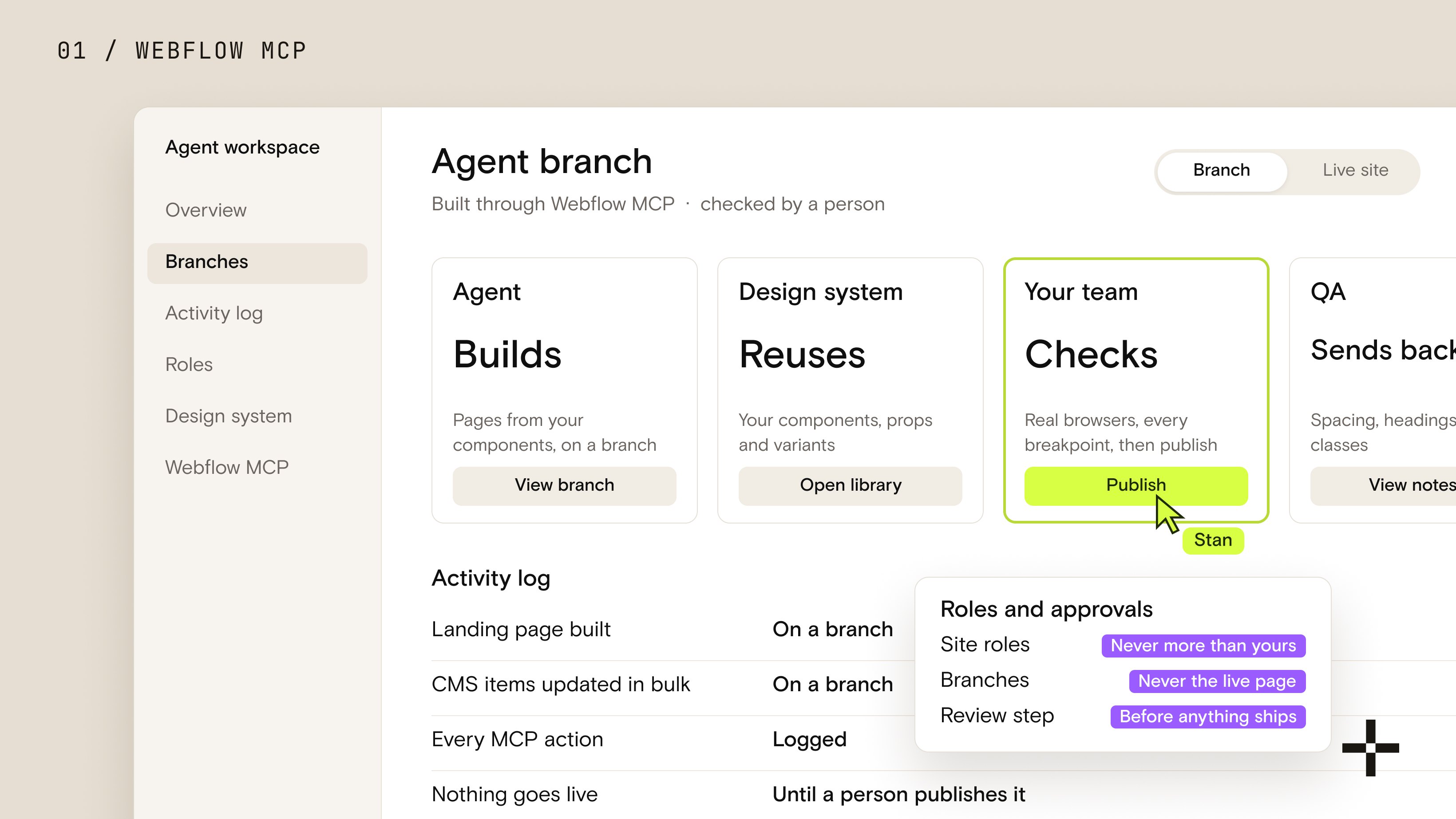
Webflow MCP: what it is, and how we actually build with it
Webflow MCP lets an AI agent build inside your site. What it can't do is decide what good looks like.

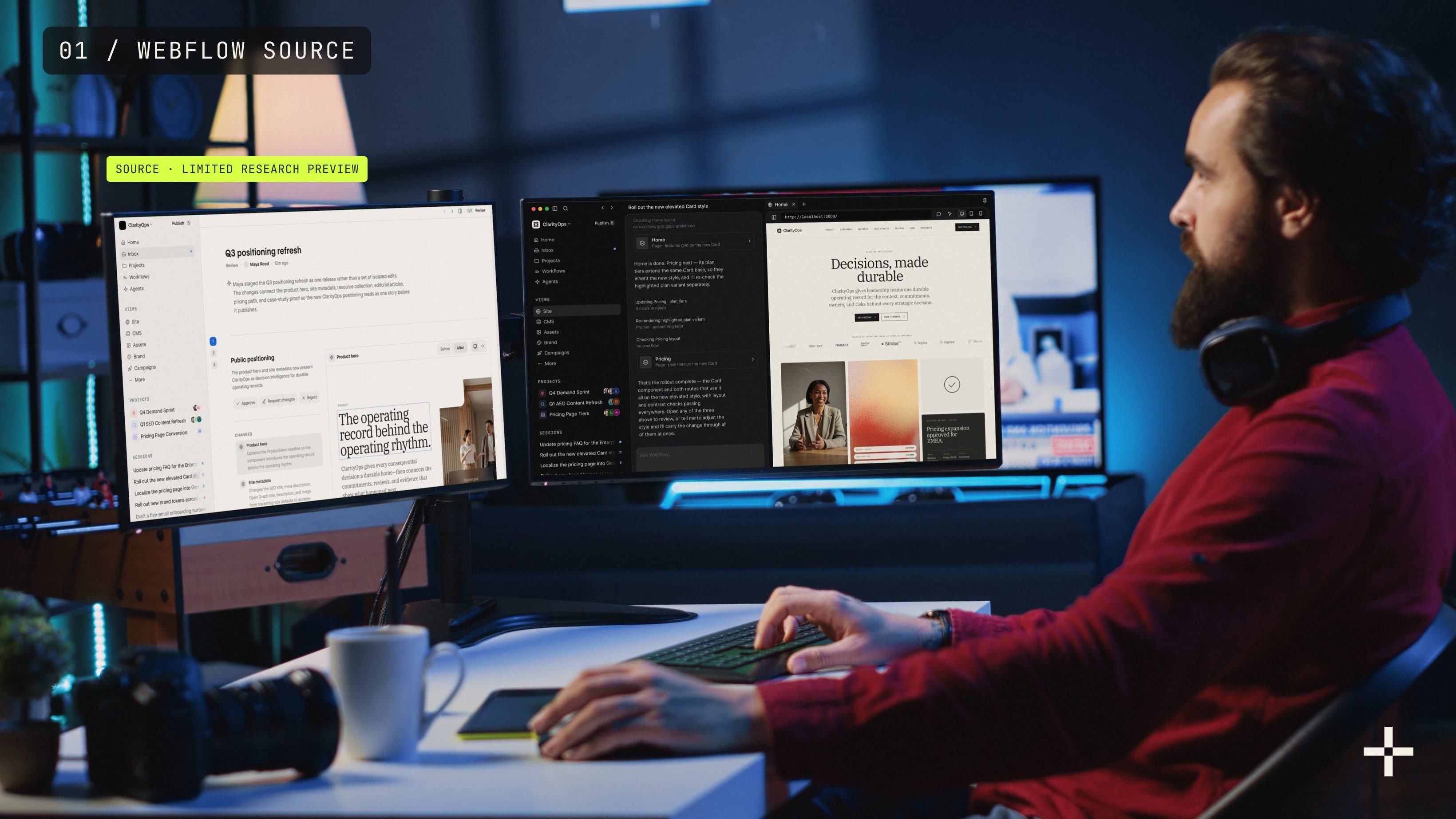
Webflow Source explained: what it means for your Webflow site
Source is Webflow's bet on sites run by marketers and agents together. You don't need to wait for it to start getting ready.