A design retainer that works like your team, without the six-month hire
StanVision is a design retainer for B2B SaaS: an embedded design team working across product, brand, and Webflow on an ongoing basis. You get a partner that already knows your product, not a new vendor to re-brief every quarter. Our average partnership runs past three years.
B2B SaaS teams who kept us on, year after year


You don't have a project. You have a roadmap that keeps moving
Most design help is sold in projects: a fixed scope, a start, an end, a handoff, goodbye. That works for a one-time build. It does not work when design is a standing part of how you ship. This is rarely a budget problem. It's a structure problem.
Project work makes you re-explain your product to someone new every few months, and the steady stream of smaller design needs has nowhere to go in between.
The hiring math doesn't add up
A senior product designer takes months to find and longer to ramp. A full in-house team is a large, fixed bet to place before you've proven you need all of it.
Every project starts from zero
A new agency or freelancer spends the first weeks learning your product, your users, and your codebase. You pay for that ramp-up every single time, and the work only gets good once it's nearly over.
The small stuff piles up
The dashboard tweak, the new feature screen, the launch landing page, the deck for the board. None is big enough to scope as a project. All of it sits in a queue with no one to own it.
The brand drifts while the product moves
Features ship, the marketing site lags, the design system rots, and the product, the site, and the pitch deck slowly start to look like three different companies.
What a design retainer with StanVision covers
A design retainer is an ongoing engagement where a dedicated design team works as part of yours, on a set cadence, instead of project by project.
With us that means one embedded team covering product, brand, and Webflow, plugged into your tools and your sprints. You set the priorities each cycle; we design against them. Because the same team stays on, the product context compounds instead of resetting.
Product UI/UX that keeps pace
Your roadmap doesn't pause between releases, so neither does the team designing for it. New flows, feature screens, and fixes move with your sprints.
Marketing site work in Webflow
New pages, launches, and A/B tests built in Webflow by the same team that knows your funnel, so you stop queuing a separate vendor for every update.
Brand consistency as you scale
We hold the visual system steady while the product, the messaging, and the headcount all change around it.
Design system upkeep
The people who built your components keep them current. A maintained system is why shipping stays fast instead of slowing down as the product grows.
Conversion and landing pages
The team that understands your sign-up flow builds the pages that fix it, informed by your funnel rather than a generic template.
Fast turnaround on small requests
The one-off edits that stall when nobody owns them get handled in days, not parked until the next project.
Prototyping and motion
Interactive prototypes and motion for launches, sales decks, and fundraising, on call when you need them.
Engineering-ready handoff
Specs, tokens, and assets your developers can build straight from, so design and engineering stop trading rework.
Embedded design strategy
A partner who already understands your product weighs in on what to design and why, not only on how it looks.
How a design retainer with us actually runs
A retainer only works if the team is genuinely embedded, not waiting at arm's length for tickets. Here is how we set that up.
Results our clients reached
Real business milestones the teams we partnered with hit during the engagement. The work is ours; the wins are theirs.

$200M+
Raised at a $1B valuation, all three rounds landing after our redesign went live.

$170M
Raised while scaling its global payment infrastructure platform.

$13M
Raised while expanding into a category-leading AI planning platform.

$73M
Combined acquisition value across client exits.

8 years
One of our longest partnerships, spanning strategy, branding, and digital products.

24%
Increase in conversion rate following the website relaunch.

18%
Reduction in bounce rate one month after launch.
The proof a retainer works is how long clients keep it
The strongest evidence for an ongoing partnership isn't a single launch. It's the clients who stayed. Some of ours have worked with the same StanVision team for the better part of a decade, across product redesigns, rebrands, new marketing sites, and everything smaller in between.
The cases below show what compounds when the team designing for you never has to relearn your product.
58%
more sessions in the first two months after launch
2x
total traffic two years on, with almost no paid spend
2.3x
organic search traffic since the relaunch
$1B
valuation reached 15 months after the site went live
3x
traffic in the two months after launch
50+
pages designed and shipped, up from 5
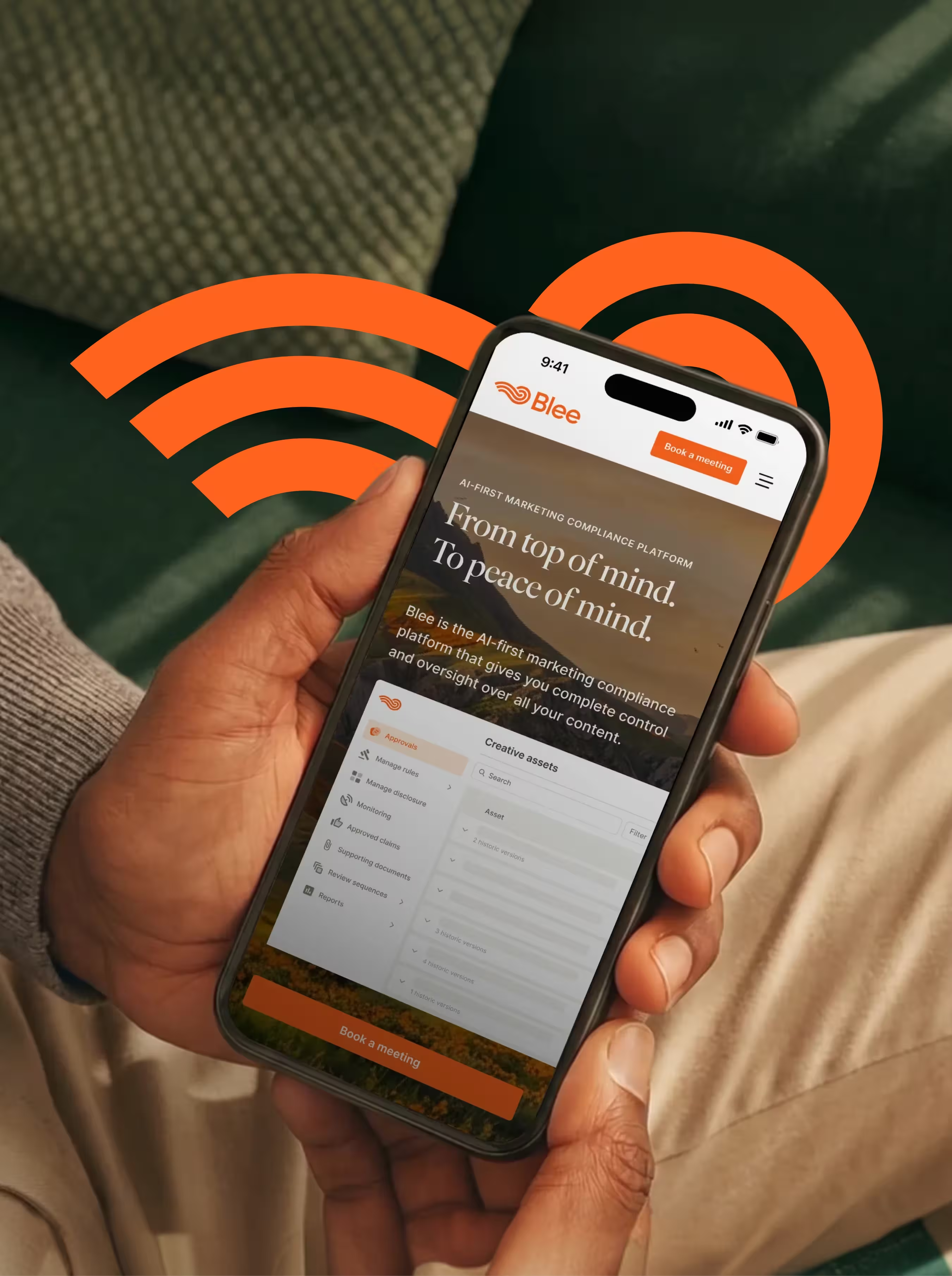
3x
organic search traffic after launch
90%
total session growth in seven weeks
54%
more direct traffic after the rebrand
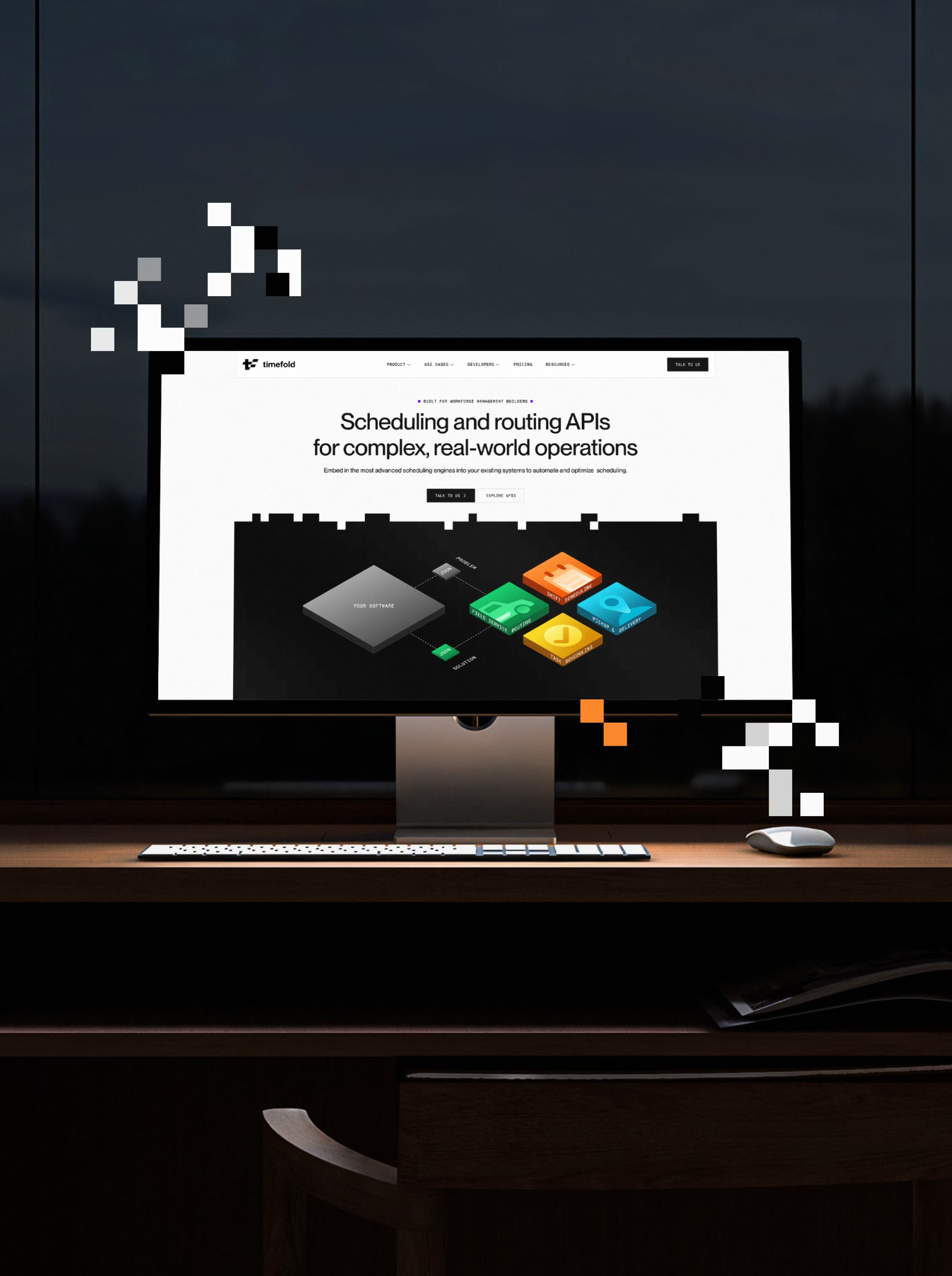
4.6x
More inbound form submissions
7x
Higher visit-to-lead rate
200+
Pages migrated off Craft CMS
A retainer, a hire, or a freelancer: which fits
A design retainer isn't always the right call. If you have a single, well-defined build, a project engagement is the cleaner fit.
Here's an honest read of the trade-offs when design is an ongoing need.
65 awards and recognitions


Industries
we go deep in
We specialize where design and growth decisions carry the most weight.
Frequently asked questions
Questions teams ask before starting a design retainer.
What is a design retainer?
A design retainer is an ongoing engagement where a dedicated design team works for you on a set cadence, instead of being hired project by project. You reserve a team's capacity each cycle and direct it against your current priorities. It suits companies with continuous design needs, where the cost of re-briefing a new vendor each time outweighs the cost of keeping a team on.
How does a design retainer work?
You agree a scope and rhythm up front, weekly priorities or sprint cycles, and the team embeds in your tools and works against those priorities as they shift. Unlike a fixed project, the scope flexes cycle to cycle, so you can push harder before a launch and ease off afterward without renegotiating the whole engagement.
What's included in a design retainer with StanVision?
One embedded team covering product UI/UX, brand, Webflow design and build, design system upkeep, landing pages, prototyping, and motion. You're not buying a single deliverable; you're reserving a team that handles whatever the roadmap needs that cycle, large work and small.
Design retainer vs hiring in-house: which is better?
An in-house hire gives you a permanent, full-time person with deep context over time, but takes months to recruit and covers one or two specialties. A retainer gives you a multi-discipline team in days, scales with your workload, and stays consistent, but it's a partnership, not a payroll line. The right answer depends on whether your need is a single permanent role or ongoing range across product and brand.
When do you need a design retainer instead of a project?
Choose a project when the work is bounded and one-time: a redesign, a migration, a single launch. Choose a retainer when design is a standing part of how you ship and the smaller, continuous needs keep piling up between projects. If you're re-briefing a new vendor every quarter, that's the signal.
How long do StanVision partnerships usually last?
Our average partnership runs past three years, and several have continued far longer: Tolstoy for eight years, emerchantpay for more than seven. The model is built to keep, not to churn through.
.svg)