Your product grew up. Your brand didn't. We're the B2B branding agency that fixes that.
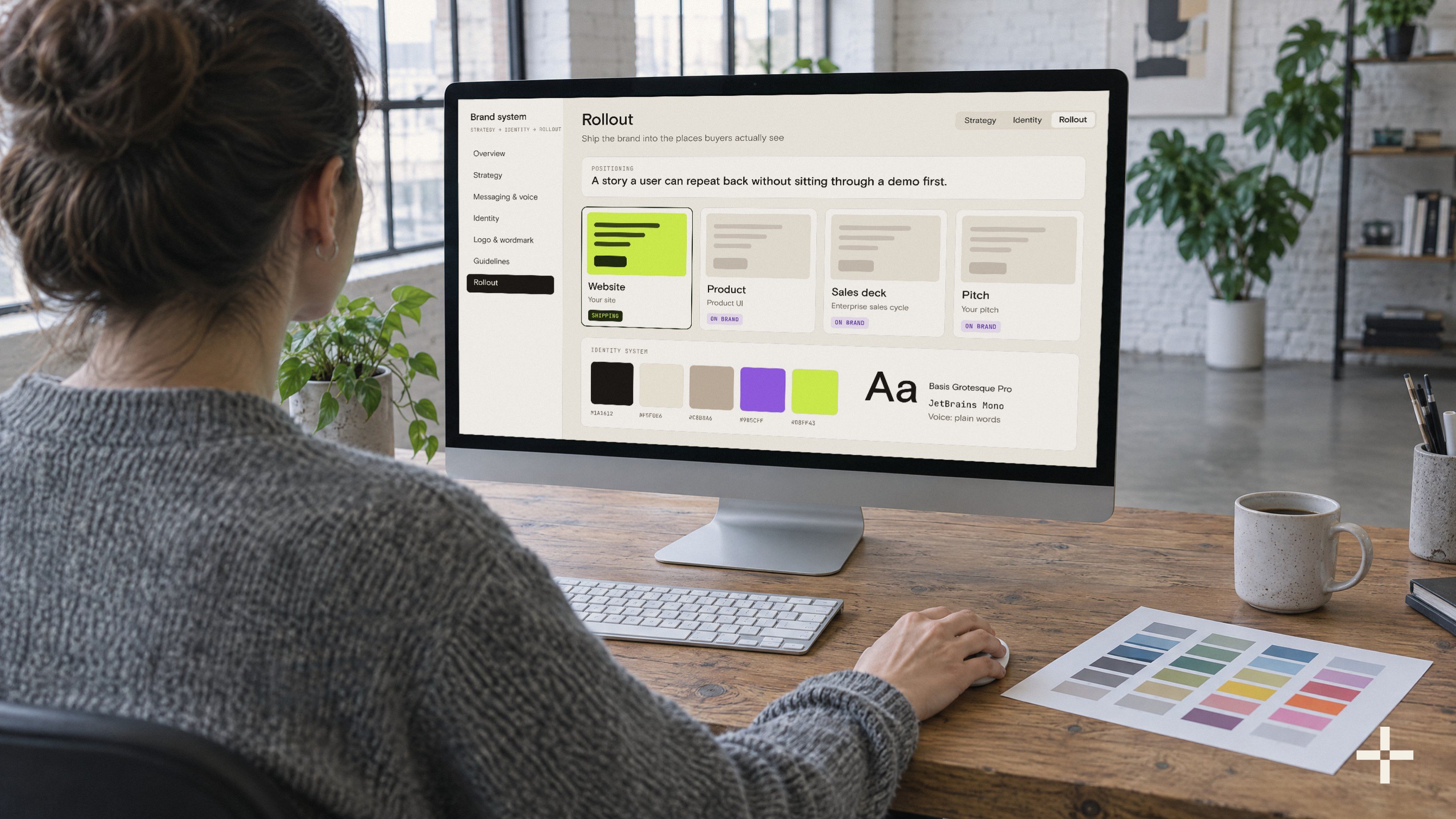
We write the positioning, design the identity, and build it into your Webflow site, product, and sales deck, with one team from the first workshop to launch day. For SaaS, fintech, and AI companies. A new brand takes 3 to 4 weeks. Brand and website together, 10 to 12.
Companies whose brand we built or rebuilt















Most B2B rebrands stop at the logo. That's why they don't work
You raised, shipped three new products, and started selling to companies with procurement departments. The brand stayed where it was. Now the website says one thing, the deck says another, and the product UI looks like a different company designed it. Which, to be fair, it did.
This is rarely a logo problem. It's a positioning problem. Nobody ever wrote down what the company stands for, so every team improvises, and buyers meet five versions of you.
The brand looks younger than the company
You're closing six-figure contracts with a brand built for a seed deck. Enterprise buyers notice, and your pricing starts to look ambitious.
Every touchpoint tells a different story
Site, deck, app, LinkedIn: four color palettes, three tones of voice, one confused buyer.
Sales pitches a different company every call
Positioning was never written down, so your best rep and your newest rep describe two different products.
Every new page starts from a blank file
No system means every landing page, deck, and launch begins with a debate about fonts. It's slow, and it never quite matches.
What our B2B branding agency delivers
B2B branding is the work of deciding what a business-to-business company stands for, then building the system that expresses it everywhere buyers look: the website, the product, the sales deck, and the inbox. It has three layers. Brand strategy decides what you say. Brand identity decides how you look. The brand system keeps both intact after the agency leaves.
We do all three, then build the brand into your Webflow site and product UI ourselves. Nothing gets lost between a PDF of guidelines and somebody else's interpretation of it. The real test of a B2B brand isn't the logo. It's whether the brand still holds up on a pricing page, inside the product, and in slide 14 of an enterprise pitch.
Positioning and brand strategy
We define who you're for, who you're up against, and the one thing you own in the category. Everything else hangs on this, so it comes first.
Customer and competitor research
Buyer interviews, a competitor teardown, and how customers describe you when you're not in the room. We find the gap before we design anything.
Messaging and voice
A core narrative, value propositions, and a tone your whole team can write in, from the homepage to the support inbox.
Visual identity system
Logo, type, color, layout, imagery, and motion, designed as one system instead of a folder of one-off assets.
Logo and wordmark
A mark that holds up as a 16px favicon and on a conference banner, and actually carries the positioning.
Brand guidelines and components
The rules and ready-made parts your team uses without asking us: usage, do's and don'ts, and templates for the things you make every week.
Pitch and sales deck
The brand applied to the document that raises rounds and closes enterprise deals.
Website, built in Webflow
We design and build the new brand into your site, so it launches as a working website, not a PDF nobody opens. See our Webflow design work.
Brand-to-product design system
We carry the brand into the product UI through a shared design system, so the app and the marketing site stop looking like two different companies.
Brand refresh vs rebrand: which one do you need?
A brand refresh updates how you look and keeps who you are. A rebrand changes the positioning, and the identity follows. If buyers still understand what you do and only the visuals feel dated, refresh. If the company changed what it sells or who it sells to, rebrand.
| Brand refresh | Rebrand | |
|---|---|---|
| What changes | Visual identity: type, color, imagery, layout | Positioning, messaging, and the full identity |
| Positioning | Kept, maybe tightened | Rewritten from the strategy up |
| Logo | Kept or lightly redrawn | Often new |
| Typical trigger | The look feels dated, touchpoints don't match | Moving upmarket, a new category, a merger, a big round |
| Risk | Low: recognition stays | Higher: needs a planned rollout |
| Timeline | About 2 weeks | 3 to 4 weeks |
| Website | Restyled | Usually rebuilt: 10 to 12 weeks for brand and site together |
How a B2B rebrand runs, from audit to launch
The brand itself takes 3 to 4 weeks. Add the website design and Webflow build, and the whole project runs 10 to 12 weeks. Strategy comes before identity, and identity comes before rollout. Skip the first step and you end up with a logo everyone likes and a brand that still means nothing.
Results our clients reached
Real business milestones the teams we partnered with hit during the engagement. The work is ours; the wins are theirs.

$200M+
Raised at a $1B valuation. All three rounds closed after our redesign went live.

$175M
Raised while scaling its global payment infrastructure.
$13M
Raised while building its AI planning platform.

$73M
Combined value of the SMSBump and NitroPack exits.
Average partnership
3+ years
Average length of a client partnership. People stay when the work keeps shipping.
8 years
And counting, across strategy, branding, and product.
AI portfolio
15+ companies
AI companies designed for, from first launch to scale.
Enterprise portfolio
10+ clients
Enterprise clients, the kind with procurement departments.

24%
Higher conversion rate after the website relaunch.

18%
Lower bounce rate, one month after launch.
Products launched
10+
Software products designed and taken to market with our clients.
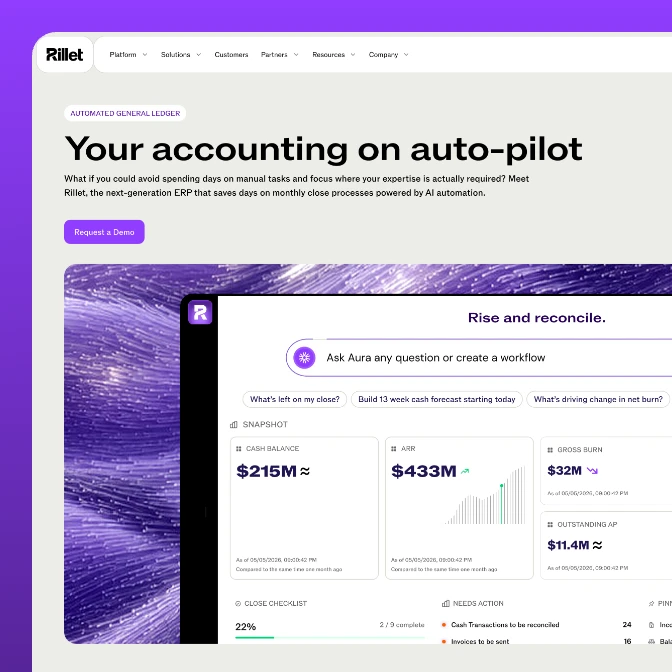
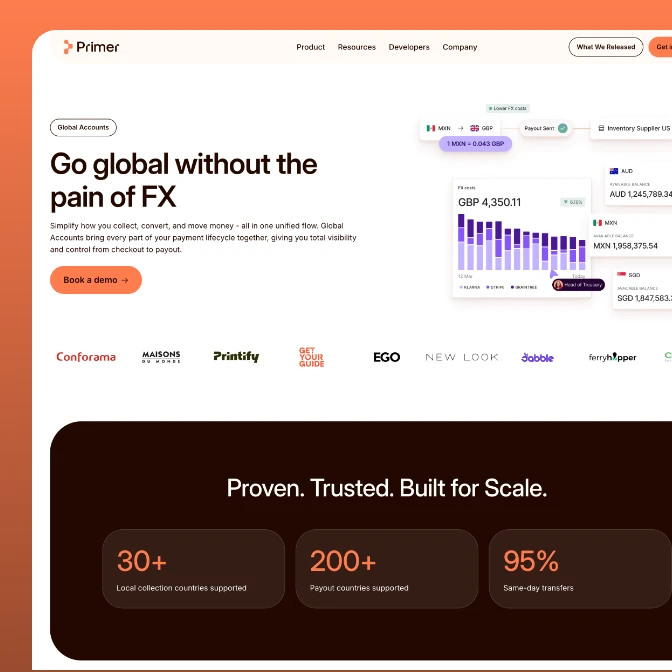
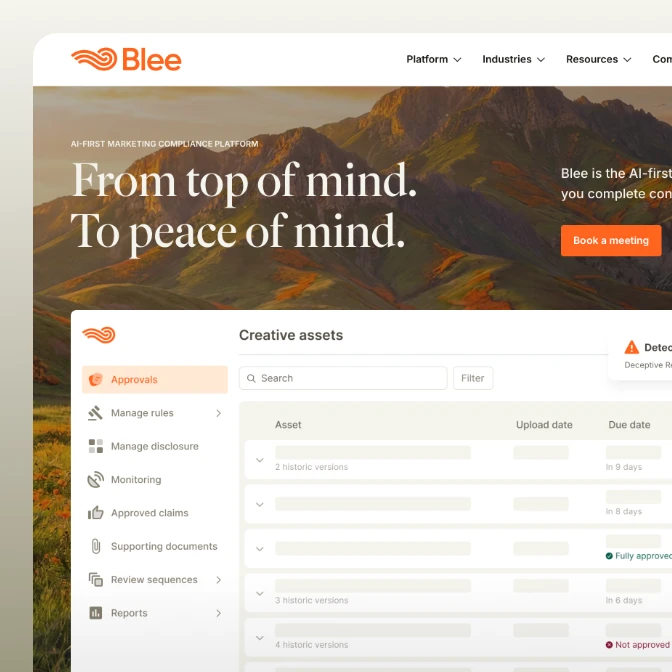
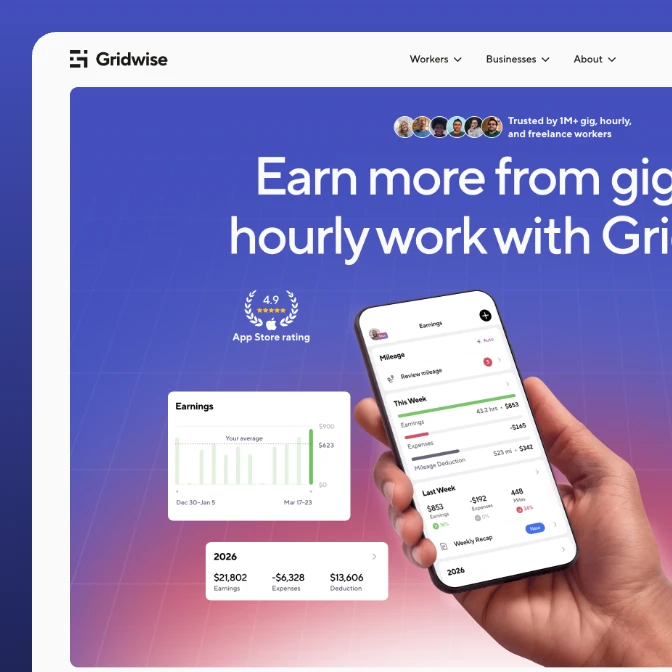
B2B branding case studies, with the numbers after launch
Every company below came to us with the same gap: the business had outgrown its brand, or had never had one. We wrote the positioning, built the identity, and launched it on a new site. The numbers on each card are what happened next.
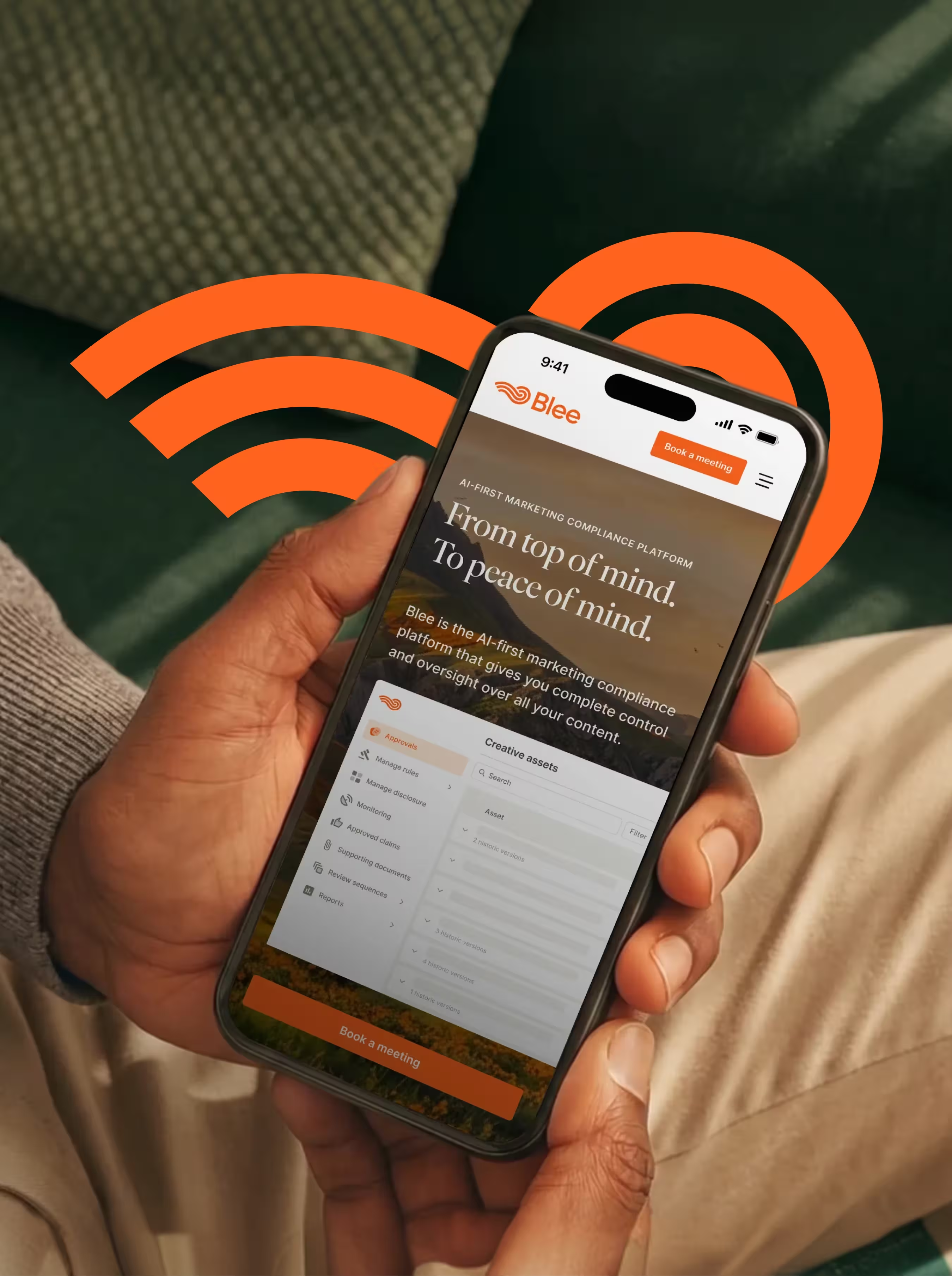
3x
organic search traffic after launch
90%
total session growth in seven weeks
54%
more direct traffic after the rebrand
70%
more qualified merchant leads after launch
55%
higher brand trust in partner feedback
0→1
brand, voice, and website built from scratch
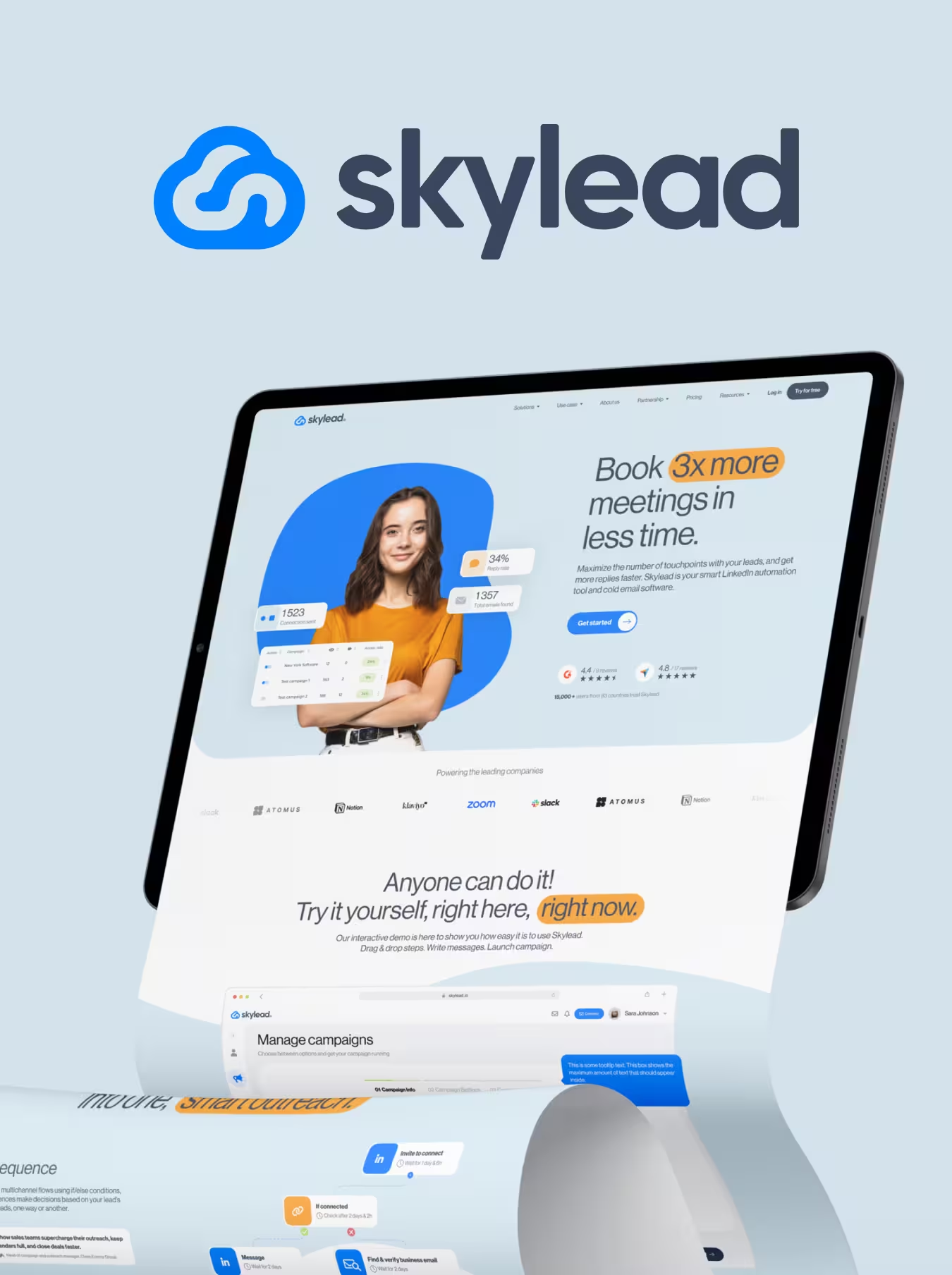
3.1x
increase in website traffic
2x
boost in user sign-ups
100%
redesigned brand and website experience
Four ways to rebrand. The honest version
Most teams weighing a rebrand choose between four options: an agency that does brand and build together, a brand-only agency, a freelancer, or a new in-house hire. Here's where each one wins, including the rows where we don't.
| StanVision | Brand-only agency | Freelancer | In-house hire | |
|---|---|---|---|---|
| Positioning and strategy | Written first, before any design | Usually strong | Rarely included | Depends on who you hire |
| Identity system | Full system with components | Strong | A logo and a few assets | Built slowly, asset by asset |
| Website | Built in Webflow by the same team | Handed to another vendor | Sometimes, quality varies | Needs a developer too |
| Product UI | Connected through a shared design system | Rarely | Rarely | Possible, if design sits with product |
| Timeline | Brand in 3 to 4 weeks; brand and site in 10 to 12 | Brand first, then a separate build | Depends on availability | Months of hiring before work starts |
| Cost | Scoped per project after one call | Brand fee plus a separate build | Lowest upfront | Highest fixed cost |
| Best for | B2B and SaaS teams that need brand and site together | Large consumer brands with campaign budgets | One-off assets on a tight budget | Companies that rebrand continuously |
Industries
we go deep in
We specialize where design and growth decisions carry the most weight.
Awards
25 awards from Awwwards, CSS Design Awards, and Behance. And since 2023 Stan sits on the Awwwards jury, which is rarer than winning.
1x SOTD + 1x DEV + 13x HM
1x Jury member

Awwwards: 15 awards in total. 1 Site of the Day (SOTD), 1 Developer Award (DEV) and 13 Honorable Mentions (HM). Stan Kirilov is an Awwwards jury member.
2 SOTD + 4 SK
1x ex. Jury member

CSS Design Awards: 6 awards in total. 2 Sites of the Day (SOTD) and 4 Special Kudos (SK). Stan Kirilov is a former CSS Design Awards jury member.
4x Featured in Web design

Behance: StanVision projects featured 4 times in the Behance Web Design gallery.
Frequently asked questions
The questions B2B teams ask before they rebrand.
What does a B2B branding agency do?
A B2B branding agency defines what a business-to-business company stands for and builds the visual and verbal system that expresses it. The work covers brand strategy (what you say), brand identity (how you look), and guidelines that keep both consistent. For software companies, it should also reach the product UI and the sales deck, because that's where enterprise buyers judge you.
How do you choose a B2B branding agency?
Look for three things: real positioning work, not only visual design; proof in your category and at your stage; and a plan for getting the brand onto your site and product, not just into a PDF. Ask to see the strategy behind a project, not only the final logo. An agency that can only show pretty marks skipped the part that matters.
When should a B2B or SaaS company rebrand?
Rebrand when the company has changed and the brand hasn't: a move upmarket, a new category, a merger, a big round, or a brand that now undercuts the price you're asking. Companies rebrand because the old brand starts costing them deals. If you only need a fresh look and the positioning still holds, a brand refresh is enough.
What's the difference between brand strategy and brand identity?
Brand strategy is the thinking: positioning, audience, and message, the decision about what the company stands for. Brand identity is the expression: the logo, type, color, and visual system that make the strategy visible. Strategy comes first. An identity built without it looks good and means nothing.
How long does a rebrand take?
A new B2B brand takes 3 to 4 weeks, from positioning and messaging through identity and guidelines. A brand refresh takes about 2 weeks. If we also design and build the new website in Webflow, the whole project, brand and site together, takes 10 to 12 weeks.
How much does a rebrand cost?
The cost of a rebrand depends on scope: a full strategy-plus-identity rebrand with a new website is a different project from a visual refresh or a single pitch deck. The big variables are research depth, the number of touchpoints, and whether the site is rebuilt. Tell us what you need and we'll give you a real scope and a number after one call.
Do you build the website too, or just the brand?
Both. We design the identity and build the site in Webflow, so the brand you approve is the brand that launches, with no handoff to another vendor in between. Brand-only projects work too if you have a build team you trust. If the brand is fine and only the site needs work, start with website design.
How do you build a B2B brand?
Start with positioning: who you're for, what you replace, and why you win. Then turn it into messaging, then into a visual identity, then into guidelines and templates your team actually uses. Most B2B brands fail at the last step, where the brand never makes it out of the deck and into the product and site.
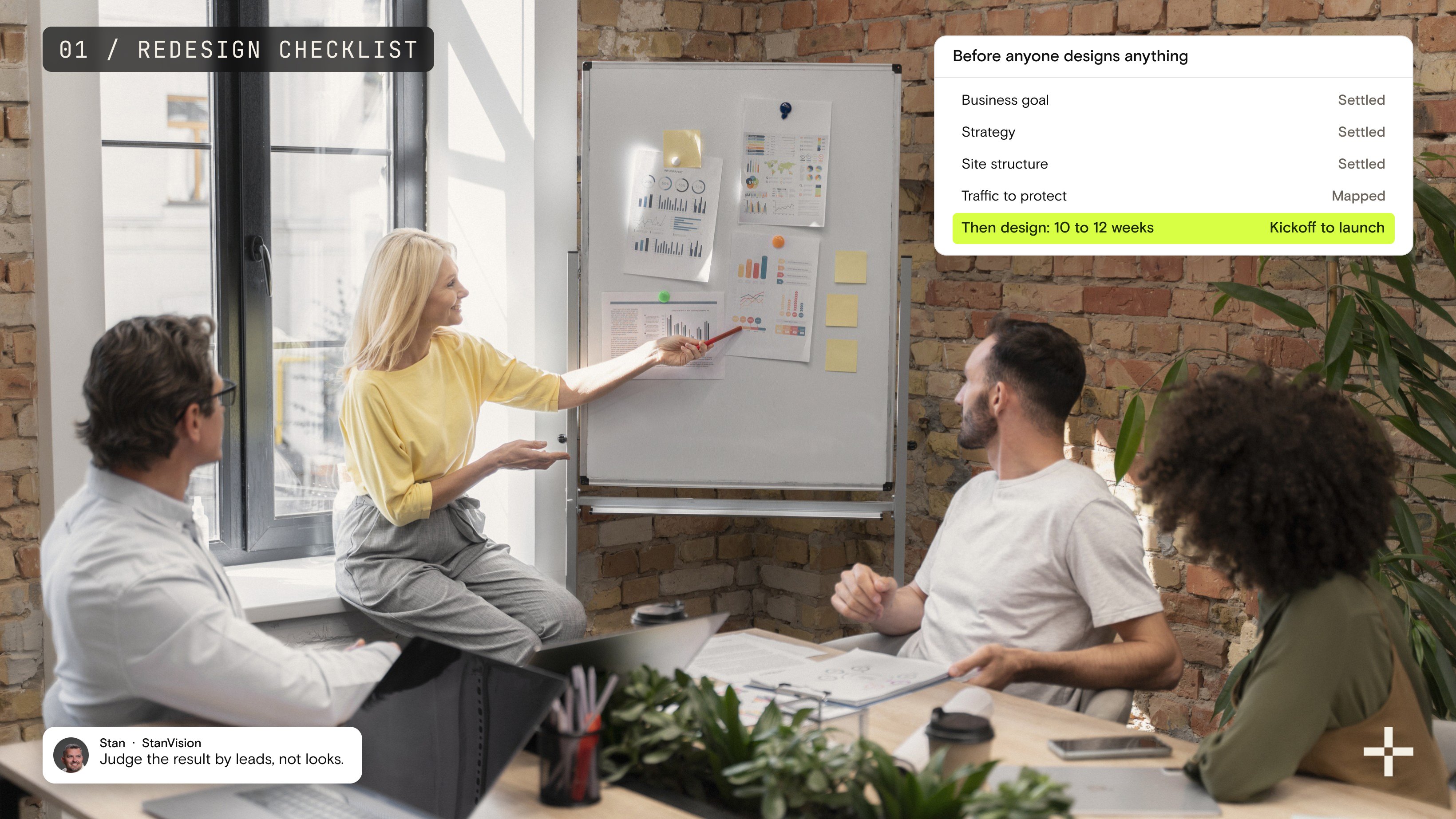
Website redesign checklist: everything to plan before design starts
Most redesigns go wrong before anyone opens a design file. Here's what I plan first, from business goals to the traffic you can't afford to lose.


UX/UI trends shaping digital products in 2026
The tools changed first. Then the workflows. Now the actual definition of a designed interface is shifting under our feet.

7 Essential elements of effective fintech web design you can’t ignore
Fintech buyers decide whether to trust you before they ever sign up. The 7 website elements that make trust visible, shown through real client work.
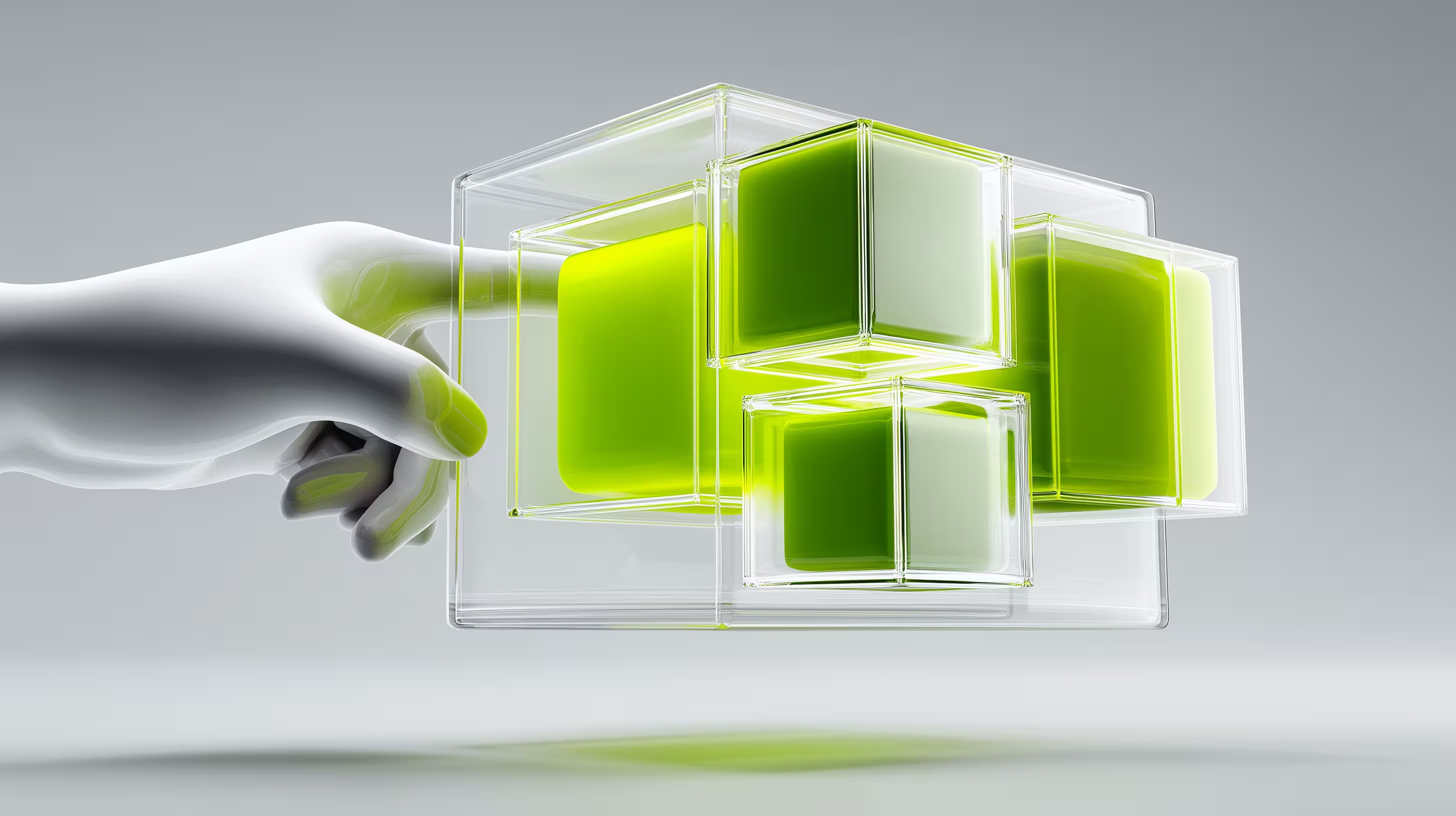
3D web design trend: Bringing volume to your designs with 3D rebranding
Branding and web design are constantly evolving, with each decade bringing fresh visual trends that redefine how brands connect with their audiences. One of the most compelling trends in recent years is 3D rebranding, which leverages the power of three-dimensional elements to create a more immersive and dynamic user experience.