

In this article, we break down what modern fintech users expect, why clarity and personalization drive trust, and how forward-looking UX patterns shape financial behavior in 2026.
In just a few years, fintech has matured from a dynamic innovation to a data-driven industry shaping how millions of people manage their money daily. Today, financial design is crucial to success in such a competitive field. It's not only measured by speed or access, but by how confident and secure people feel when interacting with their finances.
From our work with fintech products in the US and Europe, we see the same pattern repeating: users stay with products that remove uncertainty, explain their logic, and feel reliable at every interaction, not just at onboarding.
As we move into 2026, several banking UX trends are redefining how fintech brands build trust, personalize experiences, and drive long-term engagement. One note on scope: this article tracks what's changing. The practices that don't change, the evergreen fundamentals every financial product needs regardless of trend, live in our guide to fintech UX design.
How fintech UX evolved (and why it matters in 2026)
The earliest generation of fintech products succeeded by removing barriers. They replaced long queues and paperwork with mobile-first interfaces that made banking accessible anywhere. As adoption accelerated, the challenge shifted from digitalization to differentiation. The success of a fintech brand's website and product now depends less on the feature set and more on the quality of experience delivered.
Users have grown accustomed to the responsiveness of lifestyle and e-commerce platforms and expect the same fluency from their financial tools. When people open a finance app, they expect reliability, clarity, and subtle guidance that helps them make decisions with confidence.
In this environment, user experience in fintech has become the foundation of trust. Sounds simple: clean design communicates stability, while a confusing interaction harms credibility. But each interaction matters. A microcopy, animation, or notification either reinforces or undermines the sense that a user's finances are safe and comprehensible.
The fintech UX trends defining 2026

At its core, fintech design is about translating complexity into simplicity. The best products hide that same complexity behind intelligent workflows. At StanVision, that's also how we treat fintech UX design. The 2026 standard for excellence combines three qualities: transparency, consistency, and responsiveness.
- Transparency means that users understand what's happening with their data and their money at any given moment. Whether confirming a transfer or reviewing analytics, they should feel informed, not uncertain.
- Consistency ensures that interfaces behave predictably across devices and actions. Visual language, motion, and terminology remain uniform, building a subconscious sense of control.
- Responsiveness is the feeling that keeps users engaged. Even brief delays are now interpreted as friction. Fintech interfaces are adopting real-time feedback mechanisms to make each interaction feel direct and alive.
Together, these principles form the foundation the trends below build on: intuitive, stable, and human-centered experiences that guide users through financial decisions without overwhelming them.
Takeaway: clarity + consistency + responsiveness = trust formation.
Personalization: the #1 driver of fintech engagement
Users now expect their apps to recognize spending patterns, suggest optimizations, and highlight potential risks before they occur. In 2026, the standard for personalization goes beyond a simple greeting with your name. It anticipates intent through real-time financial insights.
For example, a budgeting platform might detect recurring freelance payments and automatically categorize income to project tax obligations. A credit app could adjust its recommendations based on lifestyle indicators, while an investment interface may dynamically adapt portfolio overviews to reflect short-term volatility.

The peak of a personalized banking experience is relevance that feels natural, not intrusive. Data-driven design must empower, not manipulate. When users perceive that personalization helps them make better decisions without overstepping privacy boundaries, trust grows naturally.
At StanVision, we treat personalization as a strategy, not a widget. We map segments, intent signals, and risk profiles, then design adaptive interfaces with clear opt-ins, granular settings, and plain-language explanations. This ensures compliance, builds trust with more privacy-conscious users in markets like the US, and prevents the "this app knows too much about me" reaction that often hurts adoption.
Being transparent about data use is just as important as the accuracy of predictions. When users can choose what data they share and what type of recommendations they receive, they feel in control. Personalization works best when technology supports people's awareness rather than replacing their decisions.
A practical rule we follow: if a recommendation cannot be explained in one sentence to the user, it is not ready for the interface.
Takeaway: personalization works only when users feel in control of their data.
Trust and clarity: why visual confidence converts in fintech

In finance, credibility is visual long before it's verbal. Every pixel on a screen communicates stability or doubt. In fintech UX, our designs achieve trust not through technical explanations but through clarity of presentation and tone.
Designing for trust begins with communication. Whether it's a microcopy that explains a verification step, an onboarding animation that visualizes encryption, or a calm confirmation message, that's what can make even complex transactions feel accessible. Interfaces that combine minimalism with confident typography and intuitive color hierarchies project control without appearing too simplified.
We're experiencing that security itself has become a design experience. Users want to feel safe, but they don't want to be reminded constantly that risk exists. The shift toward biometric authentication and passive security flows supports this expectation, offering protection that blends invisibly into daily use.
McKinsey's 2025 Global Payments Report makes the same point about the direction of the industry: "simplicity, transparency, and personalization must be embedded into offerings."
Accessibility also plays a subtle role. In real projects, this often means delivering thoughtful copy, reducing visual noise, and tightening critical flows until there is nothing left to misinterpret. We validate these decisions with moderated testing: if users can complete identity verification, link accounts, or move higher-value transfers without second-guessing, the interface is doing its job.
Takeaway: trust is not explained. It's designed through simplicity and predictable flows.
Engagement beyond transactions: designing for return visits
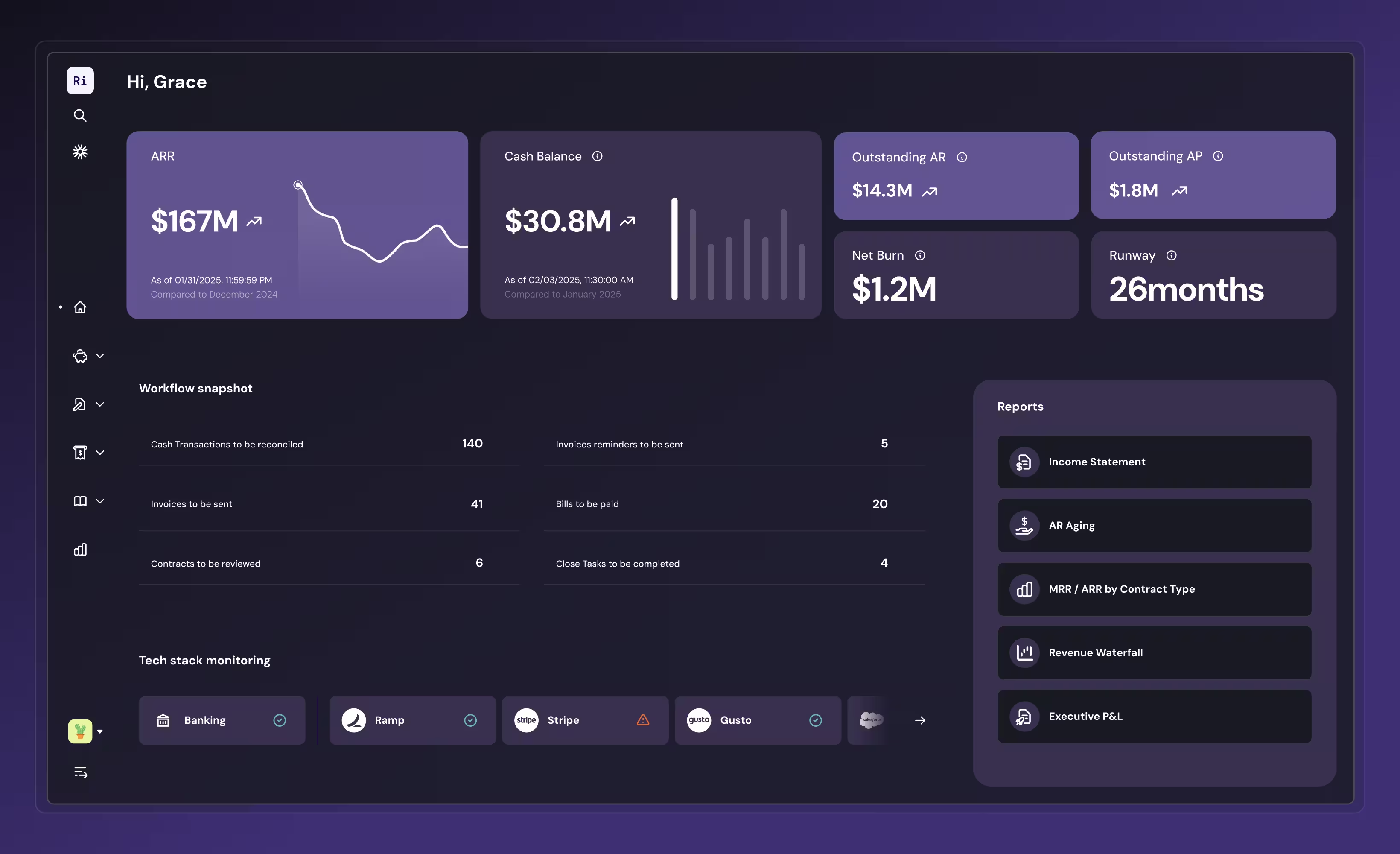
At StanVision, we see fintech engagement evolving far beyond transaction volume. Success is not defined by how often users act, but by how willingly they return. The products that win in 2026 will be those that make financial management feel rewarding: a moment of progress, not an obligation.
We believe behavioral design plays a key role in this shift. When used intentionally, elements like progress indicators, micro-animations, and milestone notifications can turn complex goals (saving, investing, paying off debt) into emotionally satisfying experiences. Gamification in finance apps all comes down to motivation with purpose.
Tone is equally vital. Mobile finance apps that speak with empathy, humor, or calm confidence humanize the relationship between brand and user. The most engaging fintech products act less like service providers and more like co-pilots: steady, informative, and quietly supportive through every financial decision.
Payments and integrations: reducing friction in financial flows
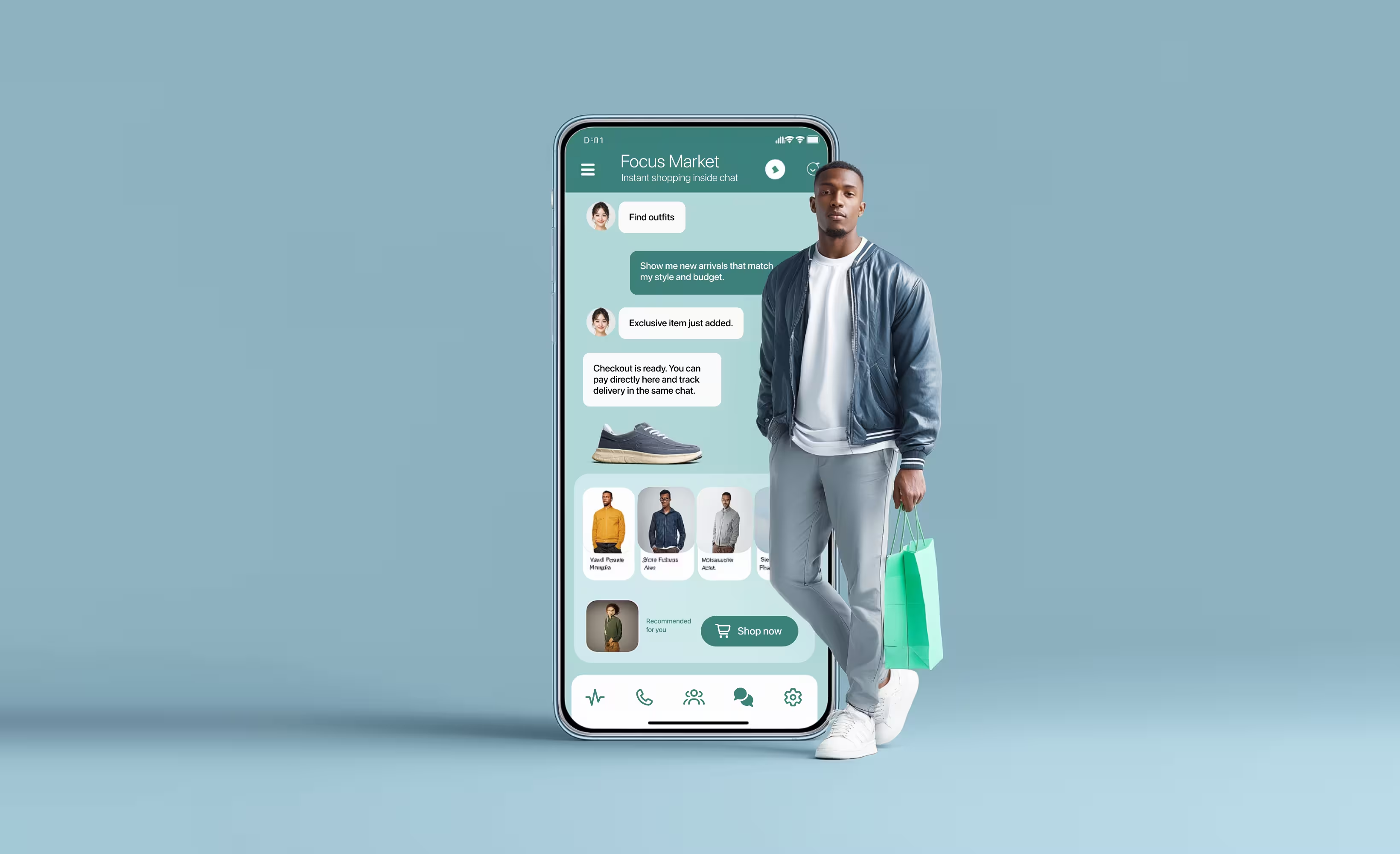
In 2026, embedded finance is redefining how and where payments occur. Users make purchases within messaging apps, investment platforms, or even retail dashboards. This omnipresence challenges designers to create unified trust signals across different ecosystems.
A consistent fintech design system (color, motion, and interaction feedback) now functions as a first, and crucial, impression between a user and a brand. When payments feel identical in tone and responsiveness across contexts, users trust the process instinctively.
Designing such frictionless flow requires attention to detail: response optimization, cross-device continuity, and intuitive recovery for failed actions. The UX discipline around payments has evolved from functional layout to emotional assurance.
Takeaway: when payments feel instant and familiar, users never question security.
Future trends in fintech UX design
At the edge of 2026, fintech user experience design stands at the intersection of intelligence, inclusivity, and transparency. The discipline is shifting from reactive improvement to predictive understanding: from designing screens to designing systems that think, adapt, and explain themselves.
Predictive personalization will move from an advantage to a baseline expectation. Financial platforms will forecast spending, detect behavioral trends, and suggest actions before users even look for them. Yet transparency will define which brands users trust. People will embrace predictive systems only when they understand why a recommendation appears; algorithms will need to explain themselves as clearly as any advisor. McKinsey's payments research frames the bar the same way: the experience must be "predictive, explainable" and aligned with the brand's trust promise.

Voice, gesture, and conversational interfaces will also move mainstream, bringing natural language back into digital finance. Users will no longer "navigate"; they'll simply ask. A question like "Can I afford a weekend trip?" will trigger contextual insights built from budgets, goals, and spending patterns. For many, this evolution will make financial management feel less mechanical and more conversational. This mirrors the multimodal shift happening across all digital products, which we cover in our broader UX/UI trends breakdown; fintech is where the trust design around it matters most.
Inclusivity will expand from compliance to culture. Accessibility features, from text resizing and high-contrast modes to neurodiverse-friendly interaction models, will become indicators of design maturity. Fintech products will increasingly adapt to users, not expect users to adapt to them.
Sustainability and ethics will become visible UX elements. Users want to see where their money goes, how it impacts the environment, and which causes it supports. Embedding ESG data directly into dashboards and transaction summaries will turn financial transparency into environmental accountability.
Across all these innovations, one theme unites the future: clarity through transparency. As automation deepens, the designer's role will be to keep fintech human: to make intelligence understandable, data empathetic, and progress visible.
Fintech UX checklist for 2026:
- Clear data explanations (no dark patterns)
- Faster onboarding with passive verification
- Adaptive dashboards based on behavior
- Predictive assistance instead of static pages
- Accessibility by default (contrast, font scaling, motion control)
From product to habit: the new benchmark for success
Retention has quietly become the most important metric in fintech. Acquiring users is no longer the challenge; keeping them engaged through trust, ease, and reliability is.
The products that endure are those that turn routine financial interactions into predictable habits. They reduce friction so effectively that managing money becomes part of daily life rather than a conscious task. When a user checks their balance, moves funds, or reviews spending analytics without hesitation, the product has achieved maturity.
This is the true measure of great fintech UX: when design becomes invisible, yet its influence is felt through sustained confidence.
For us, "habit-forming" is not about creating dependency, but about building products users trust enough to return to without resistance. When we see increased feature adoption, reduced drop-off in critical flows, and consistent positive feedback in usability rounds, we know the experience is not just functional. It's part of someone's financial toolkit.
At StanVision, we work with fintech innovators who share this perspective. Our UI/UX design approach integrates research, behavioral insight, and design thinking to craft experiences that feel precise, secure, and deeply human. As technology advances, we believe the goal of design remains to make financial decisions clear, intuitive, and empowering for everyone.
In a landscape where user trust defines product survival, the fintech experiences that win are the ones that make money management feel clear, predictable, and human.