Key takeaways
- The best SaaS design agencies in 2026 design the product and the website as one system: StanVision, MetaLab, Clay, Superside, Eleken, Pony Studio, Ramotion, Uitop, Arounda, and Excited each cover a distinct slice of that job.
- Match the agency to your stage, not their portfolio. Seed teams fixing activation need onboarding obsessives; Series B teams selling enterprise need design systems and credibility.
- "Top" and "best" are different things. Top agencies are the most visible; the best agency is the one that fixes what's breaking for your product right now.
- Judge agencies on outcomes, not screens. The right questions are about activation, time-to-value, and retention, not visual style.
Last reviewed: July 2026. Agencies are periodically added, removed, or updated based on current SaaS focus, client work, and market presence.
The best SaaS design agencies in 2026 are teams that design both the product and the website as one system. They help users figure out what to do in the first 30 to 60 seconds, remove steps that don't need to exist, and get people to their first real action faster. The ten agencies on this list were selected on real SaaS outcomes, not visuals alone: onboarding improvements, faster time-to-value, and measurable growth after launch.
I've worked with funded SaaS startups that spent 12+ months building powerful products, only to lose users in week one. Not because the tech failed. Because nobody understood how to use it. Onboarding drop-off, confused signups, zero traction from launch. Dashboards packed with features and zero hierarchy. Hero sections that talk about "scaling with clarity" but can't explain what the product does. Teams come to us burned by generic UX: the product works, but nobody's sticking around. This article is for those teams.
Who this list is actually for
This list is for SaaS founders, product leaders, and marketing leads who already have traction but feel something leaking. You'll get value from it if at least one of these is true:
- People sign up but don't activate without a demo or hand-holding
- Your product works, but first-time users feel overwhelmed or lost
- The website looks polished, but sales cycles run longer than they should
- You keep shipping features, yet retention and conversion stay flat
We see this most often in Seed to Series B SaaS teams, especially fintech, AI, data, and B2B platforms where complexity stacks fast.
This list is not for you if you're still validating the idea, you only need visual polish or a quick landing page, or you're choosing purely on price. The agencies below are the ones teams bring in after the product works and helping users understand it suddenly matters more than shipping features.
Why I'm qualified to put this list together
This list isn't based on portfolios, trends, or second-hand opinions. It's based on what I've seen break, and what actually works, after 20+ years designing SaaS products and websites. I'm Stan Kirilov, founder of StanVision and an Awwwards jury member. Over the past decade we've worked hands-on with SaaS teams in fintech, payments, AI, analytics, and B2B platforms, from early Seed to post-Series B.
We've been brought in after onboarding flows failed to convert trial users, after dashboards confused first-time users despite "clean UI," and after websites won awards but couldn't explain the product well enough to sell it. In several of those projects, redesigning structure and flows rather than adding features led to measurable shifts: early usage improving within weeks instead of quarters, drop-off shrinking in first-use flows, and clients like Primer and Rillet going on to raise $175M and $100M respectively after we rebuilt how their story and product read.
So when I evaluate SaaS design agencies, I'm not judging visuals. I'm judging whether their work helps users understand a product, act faster, and stick around.
TL;DR: Top 10 SaaS design agencies in 2026 (quick list)
Short on time? Here's the fast rundown:
- StanVision: award-winning SaaS design agency focused on helping users understand what to do and act faster.
- MetaLab: veteran product design studio behind iconic tools like Slack and Coinbase.
- Clay: high-end agency for premium UX, branding, and SaaS polish.
- Superside: scalable, subscription-based design support for fast-moving teams.
- Eleken: flexible UI/UX subscription model focused entirely on SaaS.
- Pony Studio: sharp, fast, product-led design for high-growth SaaS.
- Ramotion: UX plus brand agency known for visual precision and product depth.
- Uitop: specialist in complex B2B and vertical SaaS platforms (ERPs, CRMs, analytics).
- Arounda: UX-first agency for fintech, AI, and Web3 platforms.
- Excited: SaaS design agency for complex products, web apps, and growth-stage platforms.
How to choose the right agency from this list
Quick answer: the best SaaS design agencies in 2026 are the ones that reduce time-to-value, not the ones with the flashiest UI. If users don't understand what to do in the first 30 to 60 seconds, onboarding, retention, and conversion all suffer, no matter how good the product is. "Best" depends on where you are and what's breaking right now.
"Top" vs "best" SaaS design agencies: what's the difference? Top SaaS design agencies are the most visible ones. They win awards, show up in rankings, and have recognizable clients. Best SaaS design agencies are the ones that fix what's actually broken for your product right now: onboarding friction, unclear first actions, slow first wins, long sales cycles. I've seen teams hire a "top" agency and still struggle because it wasn't right for their stage. The best agency is the one that reduces confusion fastest, not the one with the loudest reputation.
An insight from years of SaaS redesigns: most teams think they have a feature problem. In reality they have a sequencing problem. I've watched products improve activation simply by changing what users see first, without adding anything new.
Quick comparison: who each type of agency is best for
- Seed to Series A, struggling with activation? Look for agencies obsessed with onboarding, first-use flows, and task focus. Visual polish won't save you yet.
- Series A to B, sales cycles too long? You need a team that aligns product UX and website narrative. If users need demos to understand value, the UX isn't doing its job.
- Post-Series B, selling to enterprise? Brand consistency, design systems, and credibility matter more. Buyers judge your product before they log in.
- Team ships fast but UX keeps breaking? Avoid one-off designers. You need agencies that build systems your product team can maintain.
- Site looks good but doesn't convert? The problem is rarely visuals. It's hierarchy, messaging order, and what users see first. (We broke down exactly how this plays out in what makes SaaS website design convert.)
How we picked the best SaaS design agencies for 2026
This isn't a beauty contest, and nobody paid to be here. Every agency was chosen because they've actually helped SaaS companies grow, through faster onboarding, fewer user questions, higher conversion, or stronger positioning. What we looked for:
- SaaS focus. Not "we did a SaaS project once." These teams live in product UX, onboarding flows, pricing pages, and high-converting marketing sites.
- Product plus website capability. The best agencies do both, because users judge your app before they sign up.
- Real outcomes, not just visuals. Improved sign-ups, retention, early usage, reduced confusion; redesigns that helped clients raise funding or cut churn.
- Credibility through clients, not clout. Case studies with real numbers and founder testimonials, from teams that ship rather than present.
- Design systems that don't break as you grow. One polished screen is easy. Components that survive growth and keep teams aligned are the hard part.
Top 10 SaaS design agencies for product & website design in 2026
For transparency: our own studio is on this list because SaaS founders frequently compare us to these teams. The list isn't ranked, and inclusion isn't based on popularity; it's based on real product and website work I respect. Each entry blends product UX that removes unnecessary onboarding steps with sharp execution on the marketing site side.
1. StanVision: Best for SaaS teams whose product and website stopped working as one system
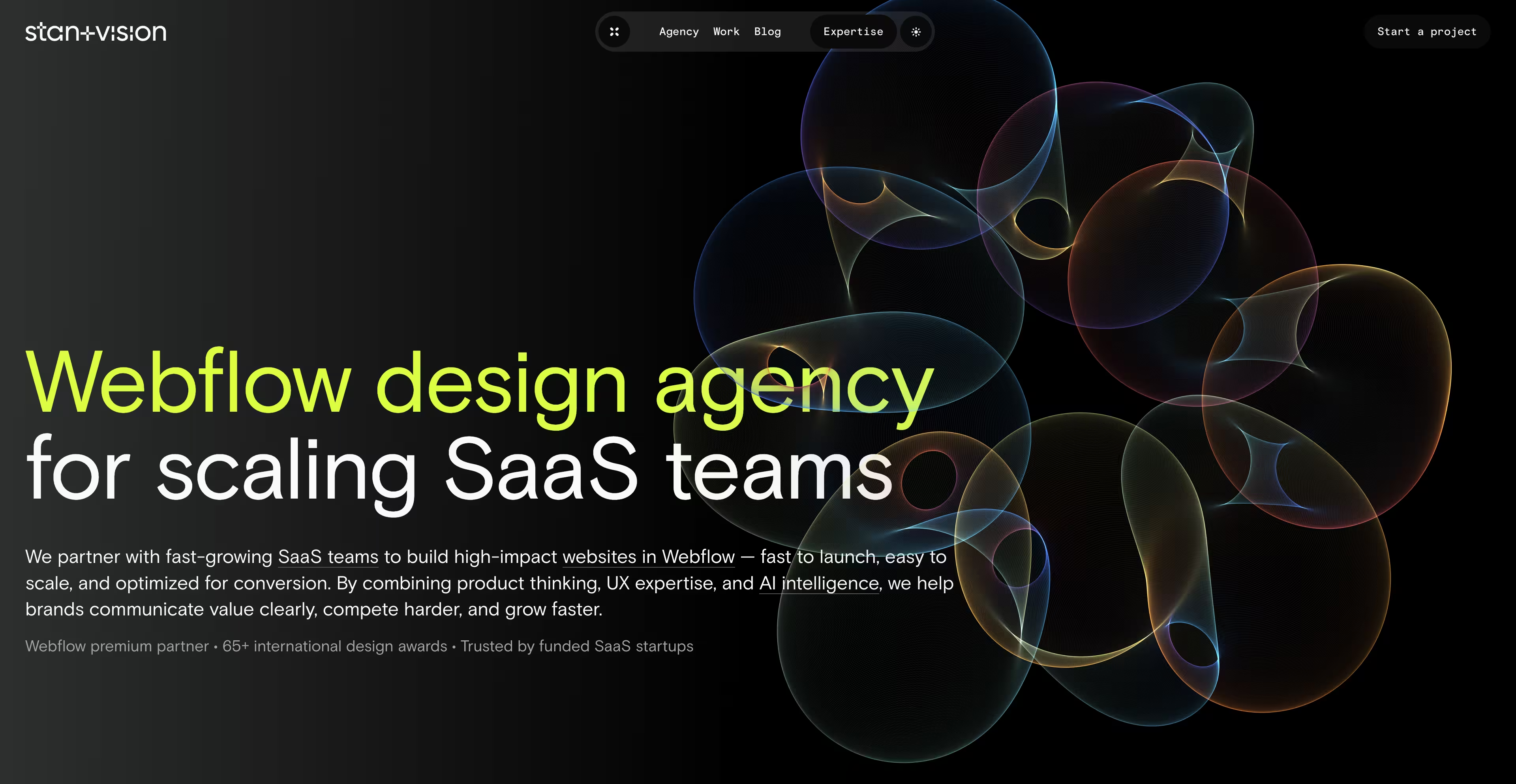
We're a Webflow Premium Partner, and most SaaS teams come to us when the product UX and the website stop telling the same story. We've won 65+ international design awards including Awwwards and CSS Design Awards, not for visuals alone, but for work that changes how users sign up and use the product. Clients usually reach out when things feel off: the product works but onboarding leaks users, or the website looks good but undersells the value. We don't just redesign screens. We rethink structure, simplify complex SaaS flows, and focus obsessively on what users see, understand, and do first.
Quick facts
- Location: Sofia, Bulgaria, working globally
- Services: SaaS product design (UI/UX), Webflow website design and development, brand identity, design systems, UX research, CRO
- Notable SaaS clients: Primer, Rillet, Tolstoy, Contiant, and funded fintech, analytics, and B2B SaaS startups
- Ideal for: Seed to Series B SaaS teams that need product UX and the marketing site aligned into one conversion system
2. MetaLab: Best for zero-to-one product UX at the highest level
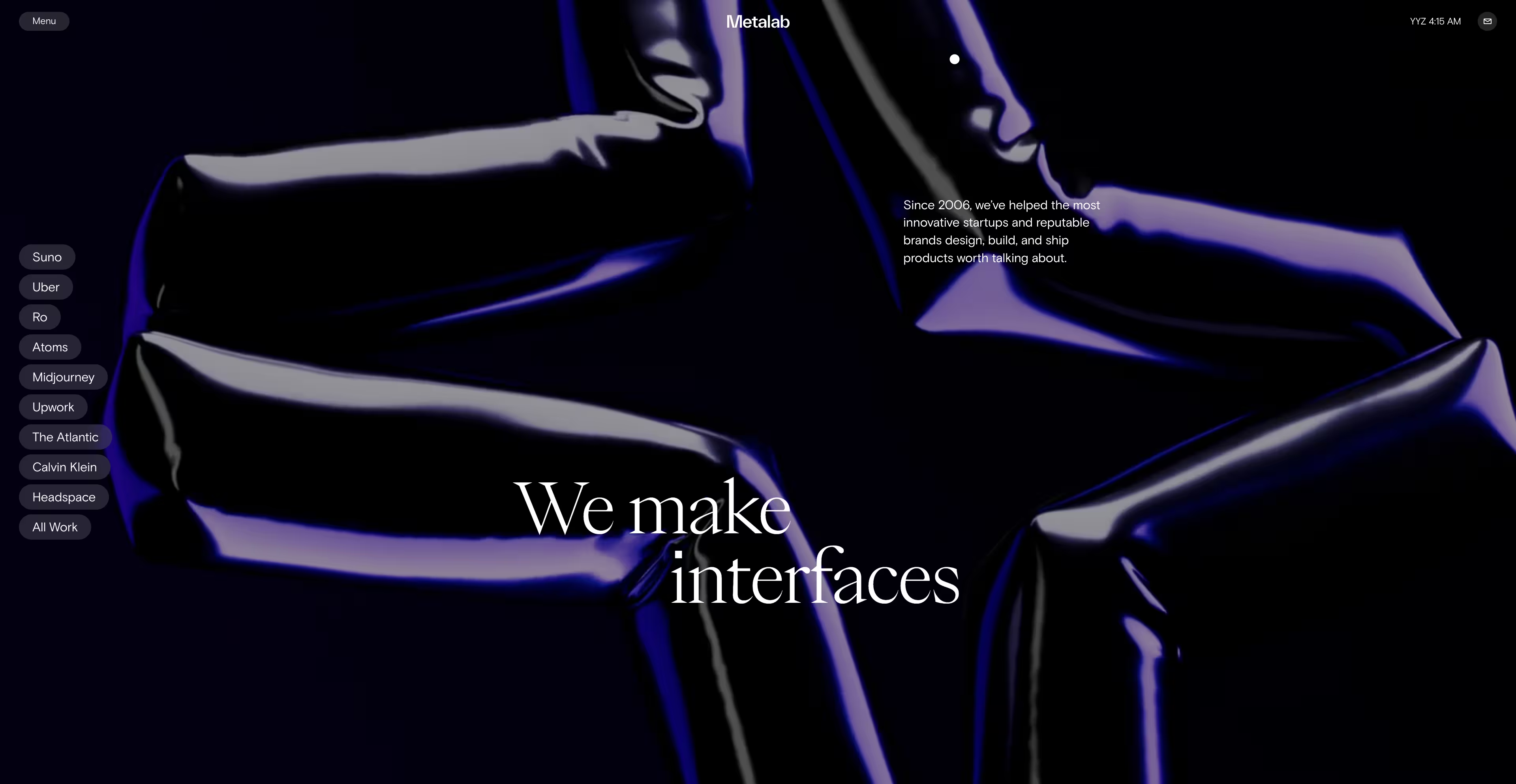
MetaLab helped design the original version of Slack, which says a lot on its own. They specialize in turning early ideas into fully formed, user-loved platforms, shaping product strategy rather than just visuals through a deeply collaborative, research-driven process. While they also handle marketing sites, their sweet spot is making complex SaaS tools feel simple.
Quick facts
- Location: Victoria, Canada
- Services: SaaS product design (UX/UI for web and mobile), website and marketing design, research, prototyping, strategy
- Notable SaaS clients: Slack, Coinbase, Pitch, Amazon, Notarize
- Ideal for: Startups solving hard problems that need users to "get it" fast
3. Clay: Best for premium UX, branding, and category-leader polish
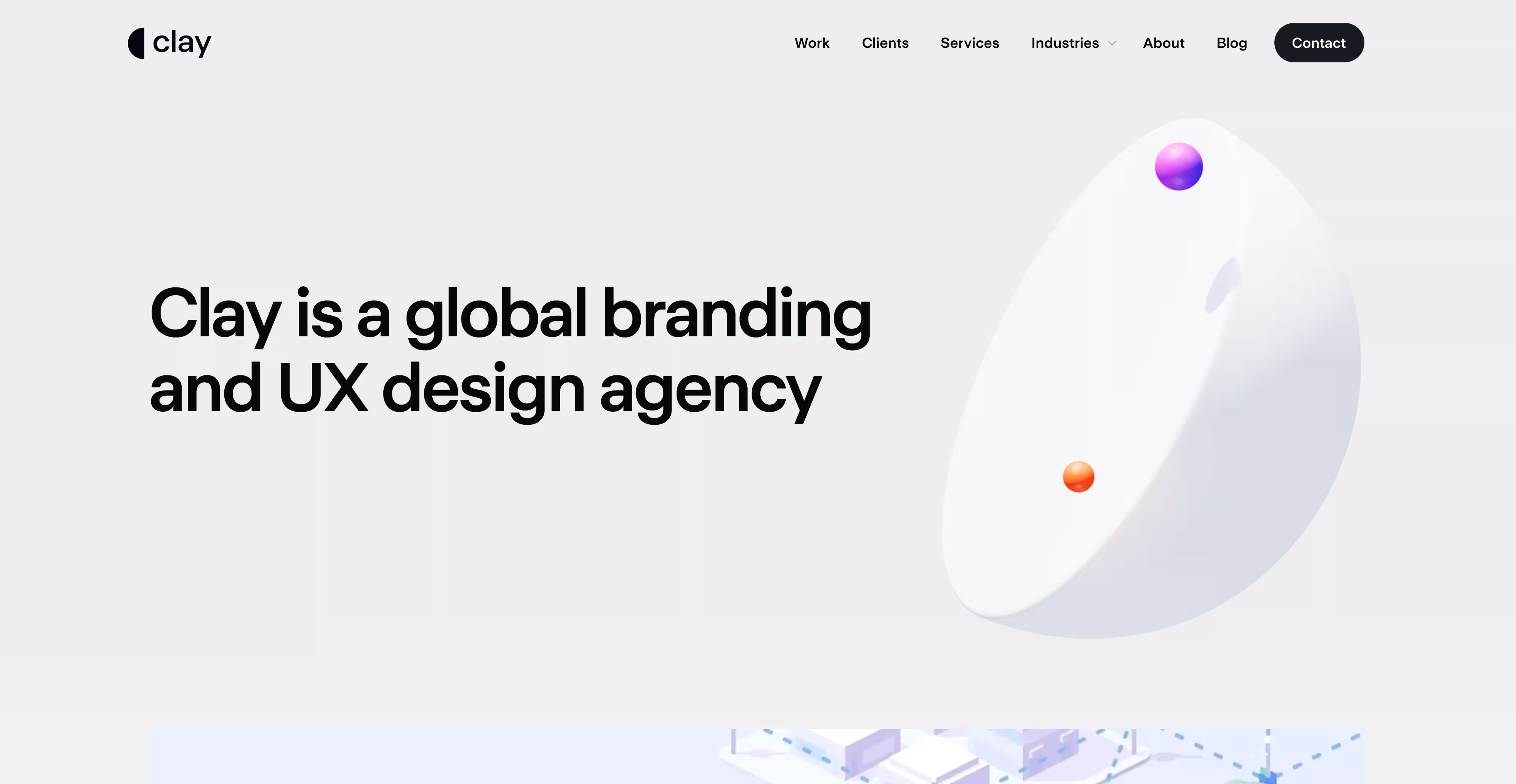
Clay crafts polished, high-conversion digital experiences for ambitious tech companies, often before those products hit scale. They bridge branding, product UX, and marketing design with precision, taking on few clients and partnering deeply on onboarding, visual identity, and core UX simultaneously. If you want your SaaS to look, feel, and perform like a category leader, Clay is the call.
Quick facts
- Location: San Francisco, USA
- Services: SaaS product UI/UX design, website design and development, branding, strategy, content, design systems
- Notable SaaS clients: Slack, Stripe, Coinbase, Uber, Zenefits, Segment
- Ideal for: Funded SaaS companies that want brand, product, and site operating at premium level together
4. Superside: Best for scalable, subscription-based design support
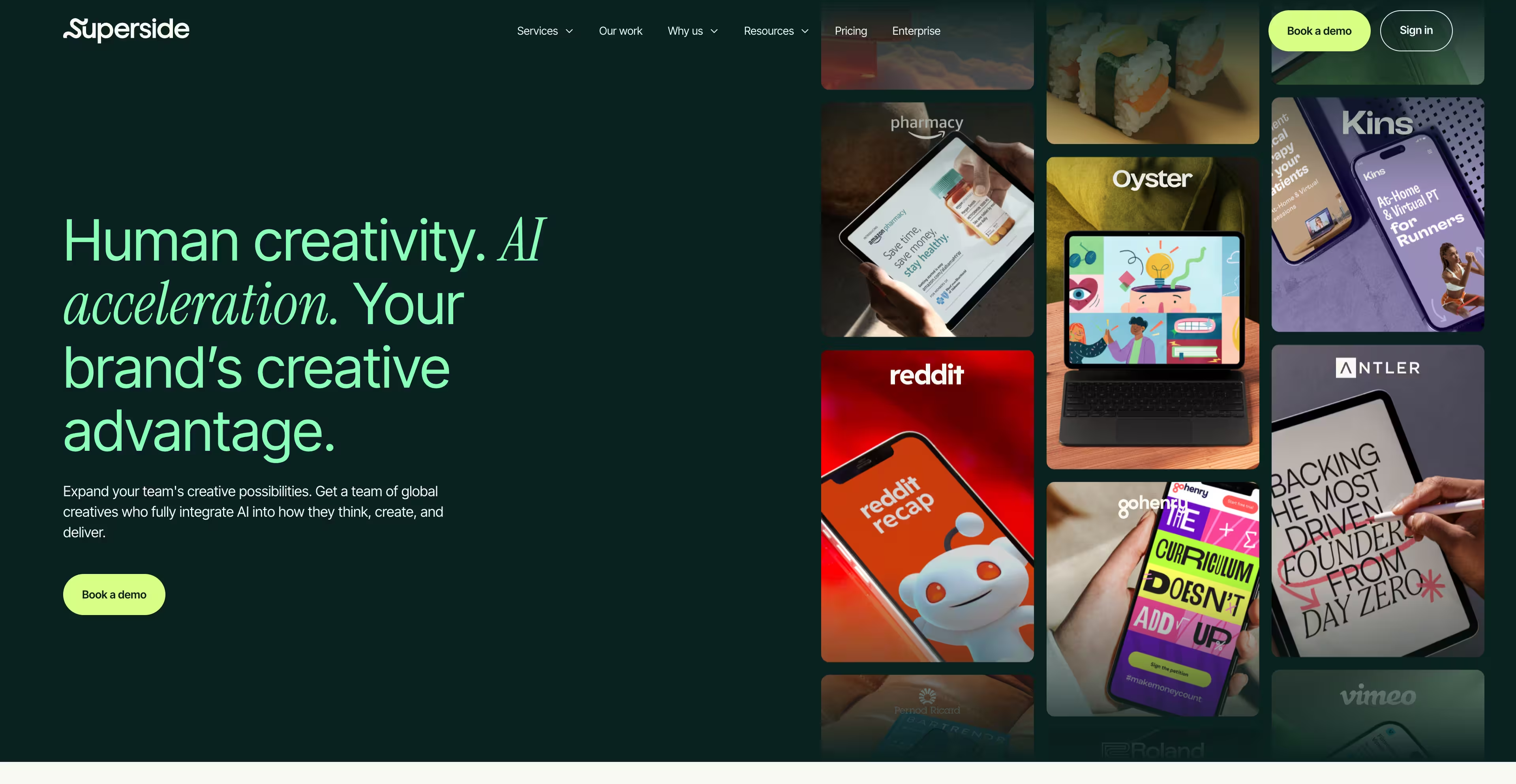
Superside isn't a traditional agency; it's a creative-as-a-service model built for scale. SaaS companies use it when they need design on tap: product UX, landing pages, and brand assets handled by a global team in your time zone. Fast, structured, and built for teams running campaigns, iterating on UI, or launching features weekly.
Quick facts
- Location: Distributed (global team across US, Canada, Europe, Africa, Asia)
- Services: SaaS product UI/UX, website design, ads and conversion assets, creative production, motion, branding
- Notable SaaS clients: Figma, Snowflake, Intuit, Amazon Web Services
- Ideal for: Marketing and product teams needing high-volume design without sacrificing quality
5. Eleken: Best subscription model focused 100% on SaaS
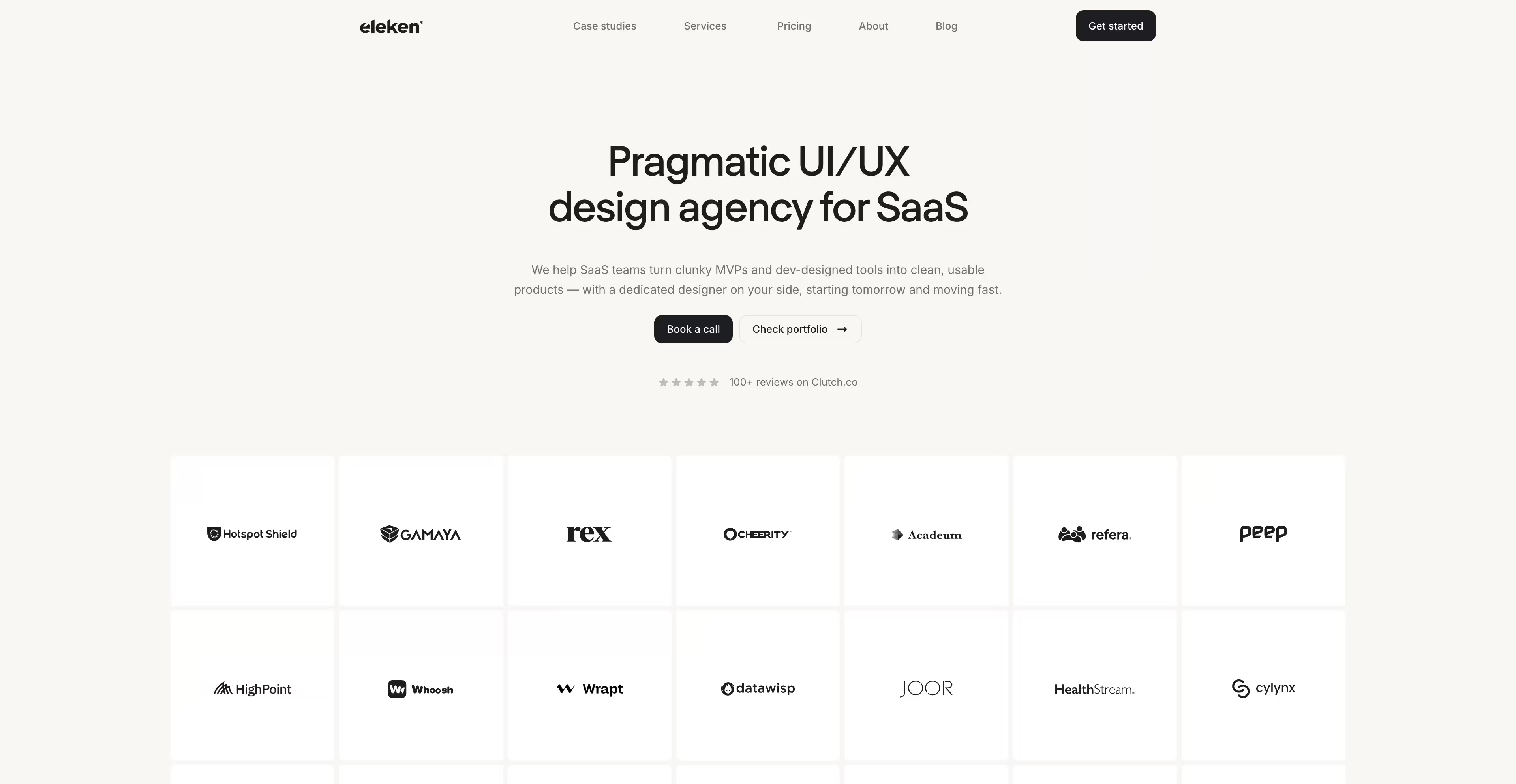
Eleken works exclusively with SaaS companies and turns down anything that isn't. That focus shows: their designers plug directly into product workflows, helping founders and PMs clean up interfaces, improve onboarding, and tighten dashboards on a month-to-month model that scales up or down. Not flashy, but fast, affordable, and deeply experienced in SaaS UX.
Quick facts
- Location: Kyiv, Ukraine (with presence in Canada)
- Services: SaaS product UX/UI design, website and landing page design, UX audits, prototyping, subscription-based support
- Notable SaaS clients: Astraea, Habstash, Gamaya, and 500+ SaaS startups across finance, geoservices, AI, and logistics
- Ideal for: Early-stage startups needing ongoing UI/UX help without a full-time hire
6. Pony Studio: Best for fast, product-led design for high-growth SaaS
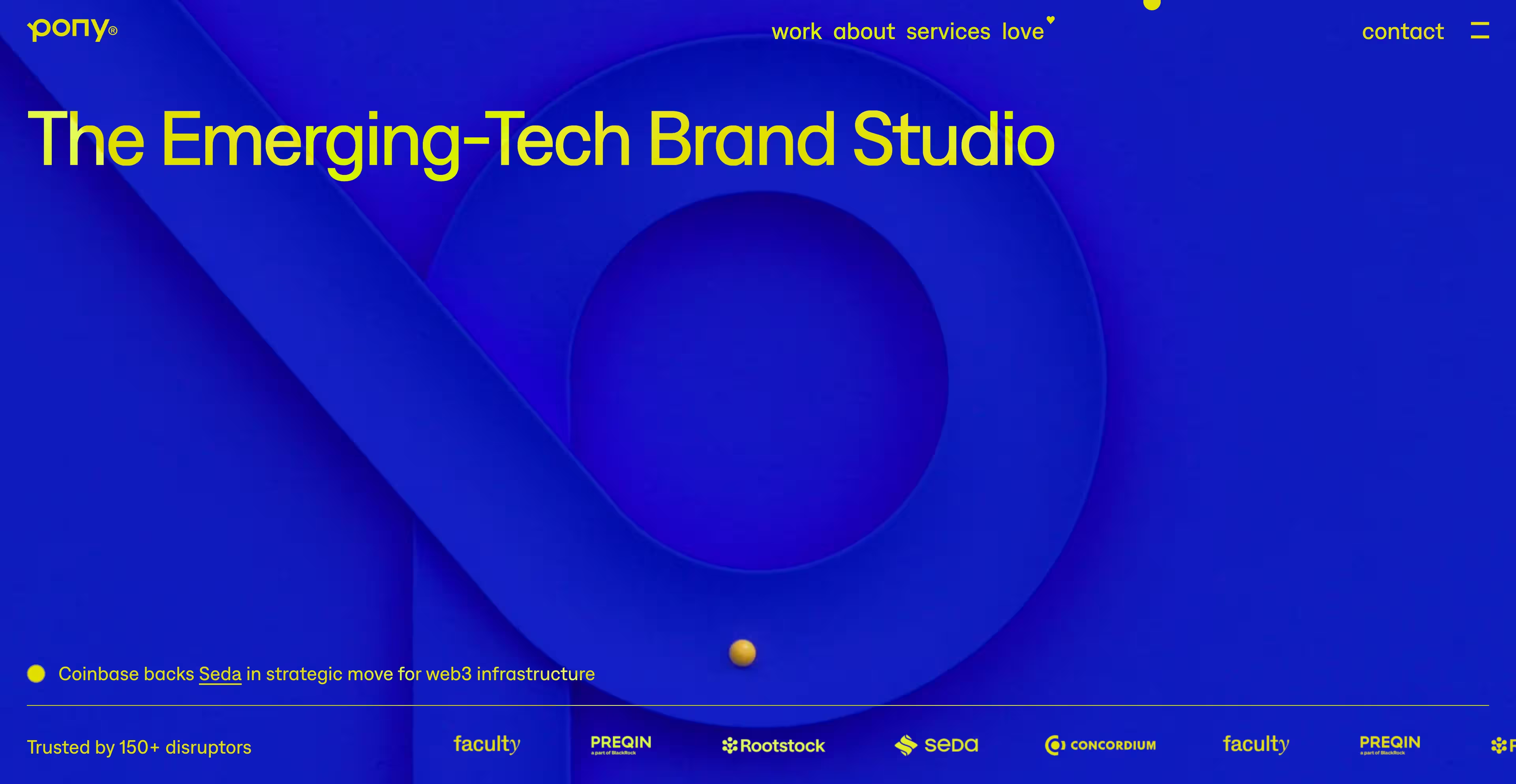
Pony Studio designs SaaS platforms that convert on both sides of the funnel. They're the team to call when the product is functional but confusing, or the site isn't telling the story fast enough. With 150+ tech clients, they've nailed the SaaS rhythm: iterate fast, ship, and focus on what changes user behavior, aligning product UX with brand and marketing.
Quick facts
- Location: London, United Kingdom
- Services: SaaS product design (UI/UX for web and mobile), website design and development, brand identity, illustration, motion
- Notable SaaS clients: Doctify, Agorapulse, Weavr, plus SaaS startups across fintech, healthcare, and AI
- Ideal for: Growth-chasing startups that want sharper onboarding and positioning, not polish for its own sake
7. Ramotion: Best for blending SaaS UX with brand-level visual precision
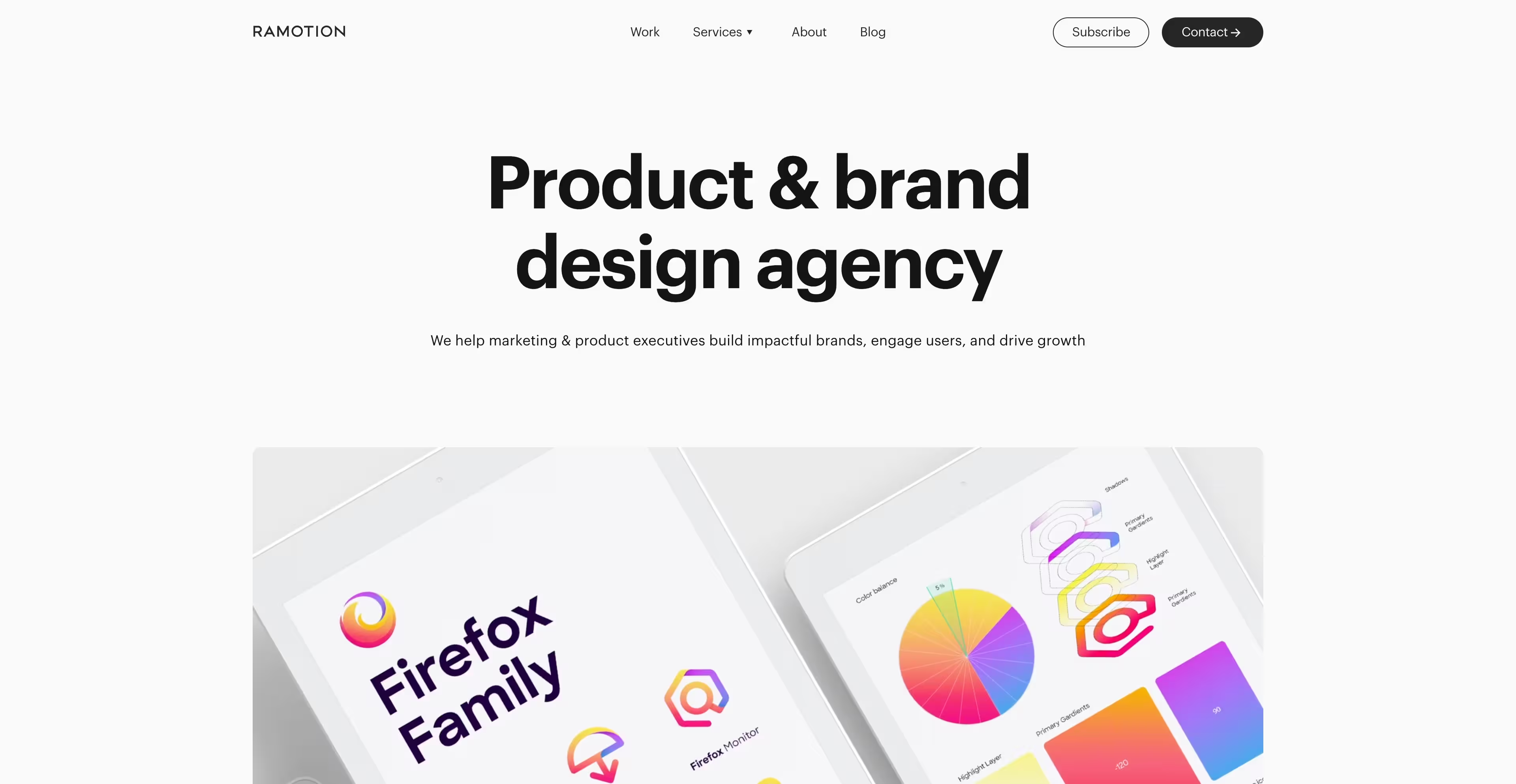
Ramotion combines deep product UX with bold, consistent branding: the team that makes SaaS companies look and feel like premium products, inside the app and out. Their engagements often span interface, logo, marketing site, and a unified design system, for early startups and names like Salesforce alike. Their Flatfile redesign preceded a $50M raise.
Quick facts
- Location: San Francisco, USA
- Services: SaaS product UI/UX design, website design and development, branding, identity, design systems
- Notable SaaS clients: Salesforce, Descript, Mozilla, Xero, Flatfile
- Ideal for: Scaling SaaS that needs a brand and UX foundation built to last
8. Uitop: Best for complex B2B and vertical SaaS platforms
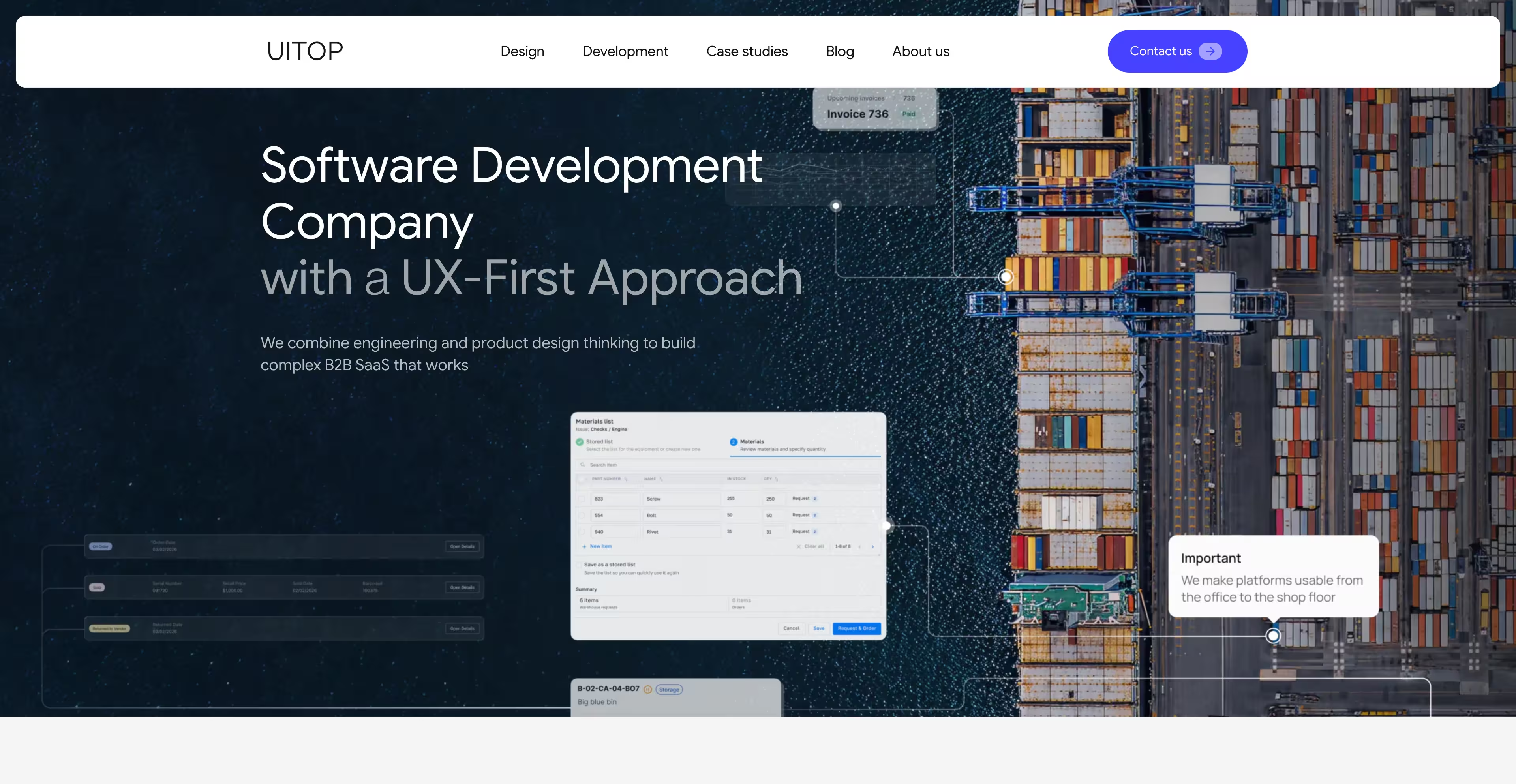
Uitop specializes in the unglamorous, high-stakes end of SaaS design: vertical ERPs, CRMs, admin panels, analytics platforms, and AI-driven enterprise tools. With 100+ SaaS products delivered, their strength is making dense, data-heavy B2B software understandable without dumbing it down, blending interface design with strong engineering awareness. They run flexible part-time and full-time collaboration models, which suits long-lived products that need continuous design depth rather than a one-off engagement.
Quick facts
- Location: New York, USA, with a Kyiv-based team
- Services: SaaS product UI/UX design, UX research, design systems, web app design, frontend collaboration
- Notable SaaS clients: 100+ B2B SaaS products across ERP, CRM, healthcare, construction, HR, and data management
- Ideal for: Teams building complex vertical or enterprise SaaS where workflow depth matters more than marketing gloss
9. Arounda: Best for fintech, AI, and Web3 platforms tackling complexity
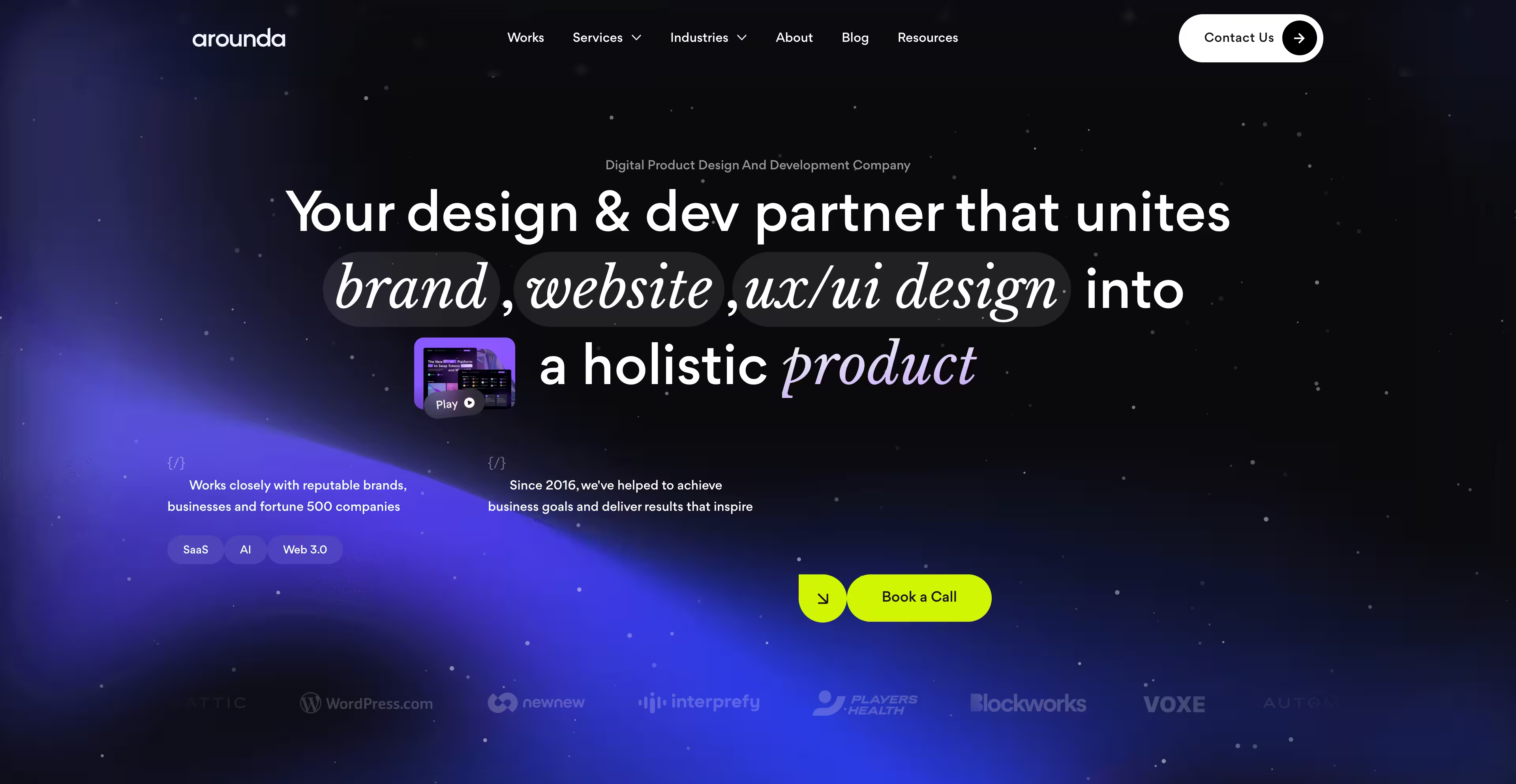
Arounda works with SaaS teams managing financial data, visualizing AI output, or building Web3 dashboards, turning messy user flows into modern interfaces. Their strength is reducing hesitation: helping users move through the product without second-guessing. They also build landing pages and marketing sites that match the product's tone and convert.
Quick facts
- Location: Odessa, Ukraine
- Services: SaaS UX/UI design, website and landing page design, branding, research, front-end development
- Notable SaaS clients: Interprefy, Players Health, E-States, plus blockchain and fintech startups
- Ideal for: Products solving hard problems that need to feel easy, with fewer support tickets and better trial-to-paid conversion
10. Excited: Best for complex products, web apps, and growth-stage platforms

Excited helps SaaS teams simplify complex products, particularly product-heavy environments like B2B platforms, dashboards, CRMs, insurtech, and enterprise tools where structure, workflows, and design systems carry the experience. They also support website design, branding, motion, and Webflow development, keeping the product and marketing site consistent.
Quick facts
- Location: Lviv, Ukraine
- Services: SaaS product design, UX/UI design, web app design, SaaS website design, UX research, UX audits, design systems, branding, motion, Webflow development
- Notable SaaS clients: Ravel, ClubReady, XILO, InsuredMine, Verida
- Ideal for: Startups and scaling SaaS companies with complex user journeys across insurance, fitness, CRM, and data
Comparison: which SaaS design agency fits your stage
What actually separates great SaaS design agencies from the rest
Any interface design company can make screens look good. That's not the hard part. What separates great SaaS design agencies is whether users understand what to do without a demo, without documentation, and without asking support. I've seen this play out across fintech, AI, and data-heavy products: two teams ship the same feature set, one sees adoption, the other sees confusion, churn, and "we'll fix it in v2."
What actually matters:
They design for the first minute, not the full feature list. Most onboarding flows fail because they try to explain everything. The winners focus on one thing: what should a new user do in the first 30 to 60 seconds? This problem usually shows up before a single screen is designed; it starts at the wireframe level, in what appears first and what action the layout quietly pushes toward. We break this down in our guide to UI/UX design wireframes for real SaaS products.
They treat the product and the website as one system. The constant mistake: the website promises one thing, the product delivers another. Great agencies align positioning, UX, and flows so users feel continuity from first click to first action.
They design for fewer decisions, not more options. After dozens of dashboard redesigns, the lesson holds: most confusion comes from layout and hierarchy, not missing features. If users stop and think "what now?", the UX already failed.
They build for iteration, not one-off launches. SaaS doesn't ship once. The best agencies design systems teams can evolve without breaking UX every release.
They talk in outcomes, not aesthetics. The strongest partners don't argue about colors. They talk about where users get stuck, how long onboarding takes, and why people drop off.
How to choose the right SaaS design agency for your startup stage in 2026
Choosing a SaaS design agency isn't about who has the nicest portfolio. It's about who can think like your team, move fast, and solve actual user problems. When the product gets easier to use, the metrics follow: more signups, smoother onboarding, higher retention.
If you're early-stage, look for flexibility, speed, and sharp UX thinking. If you're post-product-market fit, find a partner who scales with you: building systems, tightening flows, sharpening positioning.
And if you've read this far and still feel unsure where to start, reach out. We've audited dozens of SaaS products and sites, and a 30-minute review often surfaces friction you didn't know was there. You don't need more features. You need users who actually get what you've built. Let's talk.
Frequently asked questions
What does a SaaS design agency actually do?
A SaaS design agency designs both the product UI/UX and the marketing website. This includes onboarding flows, dashboards, pricing pages, and landing pages. The goal is to help users understand the product faster, activate sooner, and convert without relying on demos or sales calls.
How much does a SaaS design agency cost?
Costs vary by scope and seniority. Subscription-based or smaller SaaS agencies typically start around $5K to $10K per month. Mid-tier agencies usually charge $20K to $60K per project. Premium agencies can cost $50K to $150K+ for full product and website redesigns.
How do I choose between two good SaaS design agencies?
Look beyond the portfolio. Compare how they think, not just how they design. Ask who you'll work with, how fast they iterate, and whether they understand SaaS metrics like activation, retention, and conversion. The best fit prioritizes outcomes over visuals.
Is it better to hire a SaaS design agency or build in-house?
For early-stage teams, agencies offer senior expertise without long hiring cycles. For fast-scaling teams, in-house designers provide deep product context. Many SaaS companies use agencies during key growth phases, then transition to internal teams once systems are established.
What makes product design different from website design in SaaS?
Product design focuses on usability, task completion, and retention inside the app. Website design focuses on positioning, messaging, and conversion before signup. Both serve different stages of the user journey, but the strongest SaaS teams align them as one continuous experience.
Which SaaS design agencies are best for early-stage startups?
Early-stage SaaS startups should choose agencies that specialize in onboarding and helping users reach their first meaningful action rather than visual polish. Teams at Seed to Series A should prioritize agencies experienced in simplifying complex products, reducing time-to-value, and helping users understand the core action within the first minute of use.
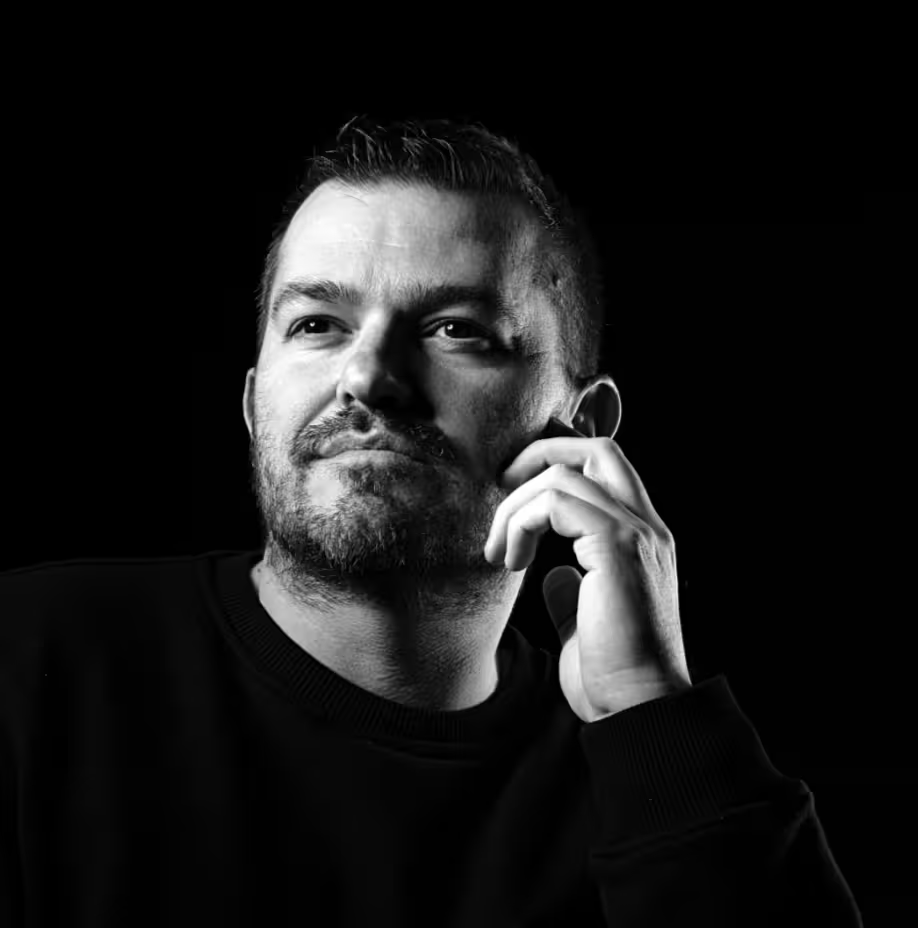
Stan Kirilov
Stan has led design for over 20 years, first as a hands-on designer, now as Experience Director at StanVision. He works with SaaS and fintech companies, from first-time founders to global brands, on products and websites built to convert, not just to look good.
He serves on the Awwwards jury and still reviews every project that ships. His standard is simple: if a design doesn't perform, it isn't finished.
.svg)