Your store has to look custom and sell at scale. Native Webflow does one of those
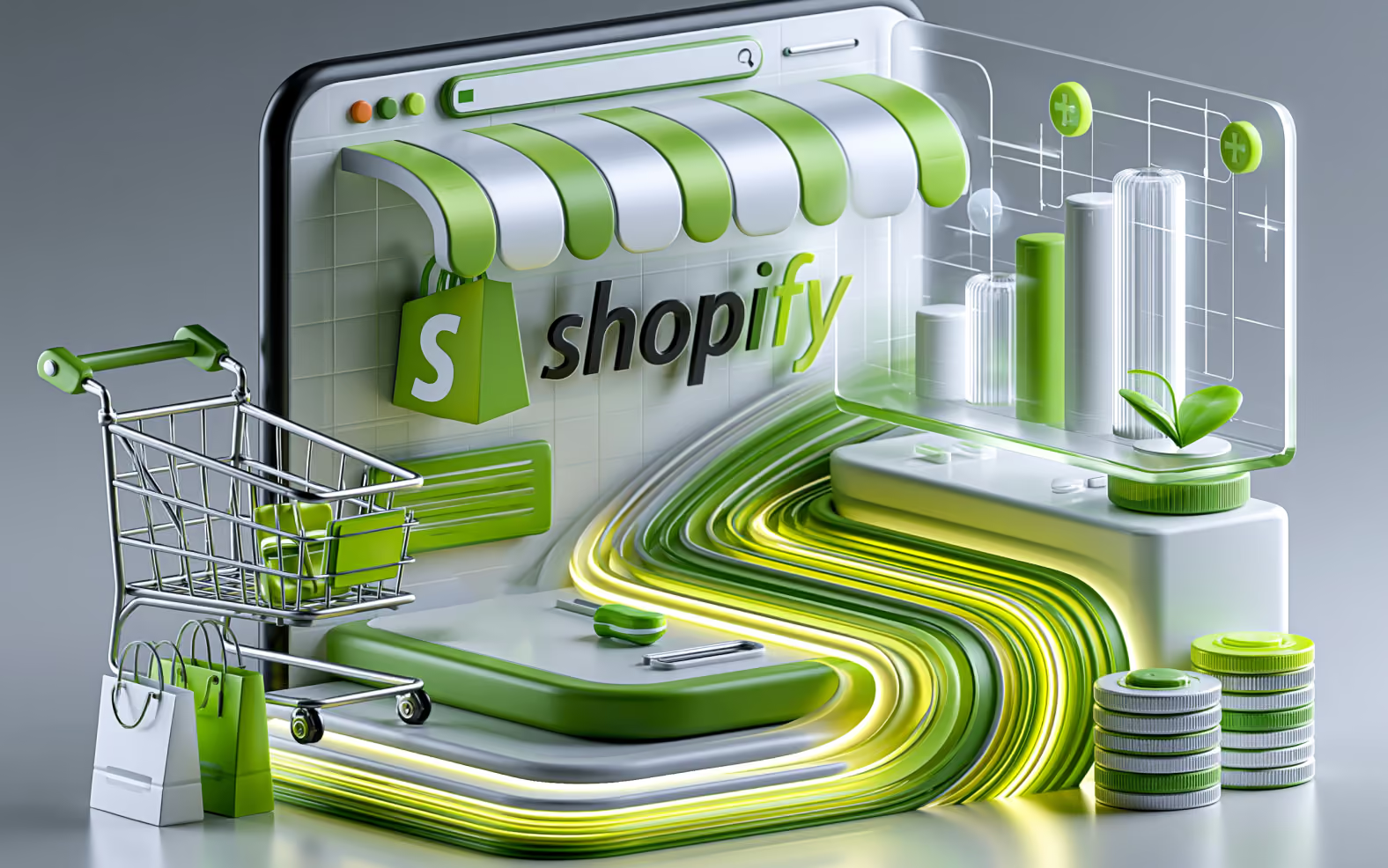
We build Webflow ecommerce sites with Shopify running products, inventory, and checkout. You get the front-end of a custom-designed brand and the commerce engine that handles real volume, wired together by us and maintained as one store. Design-led B2B and DTC brands, without the native ecommerce ceiling.
Ecommerce brands that trust us






Most ecommerce builds make you pick: a beautiful site, or a serious store
You want a store that looks like your brand and sells like a real business. The usual Webflow ecommerce build gives you the first and quietly caps the second.
That is rarely a design problem, and rarely a Shopify problem. It is a wiring problem: two specialized tools that were never built to behave like one store.
The native ceiling
Native Webflow ecommerce caps your product count, limits payments to Stripe and PayPal, and has no built-in cart recovery. Fine for a small catalog. A wall the moment you grow.
The flattened brand
Go all-in on a stock Shopify theme and you get the engine, then watch a templated layout flatten the brand that sold the company. The thing that made you stand out goes generic.
The handoff tax
Design in one tool, pay a developer thousands to rebuild it in another, then dread every future change, because each edit means another round of rebuilding.
The sync drift
Products, prices, and inventory fall out of step between the marketing site and the store. Someone updates one and forgets the other, and your customer is the one who finds the gap.
Webflow ecommerce, wired to Shopify and built to sell
Webflow ecommerce built with Shopify means the storefront is designed and hosted in Webflow, while Shopify runs the products, inventory, payments, and checkout, kept in sync so the two behave as one store.
This is a headless setup: Shopify's commerce engine running behind a Webflow front-end. We design and build the Webflow side, set up and configure Shopify, and own the connection between them. Here is what that includes.
Webflow front-end design and build
Your storefront, designed and built in Webflow, custom to your brand, fast, and editable by your marketing team without waiting on a developer.
Shopify store setup
Products, collections, inventory, taxes, and shipping configured in Shopify, the engine that does the actual selling.
Webflow to Shopify integration
The connection between the two, set up and tested so products, prices, and stock stay aligned across the site and the store.
Product and collection pages
Designed in Webflow, populated from Shopify, so every product page looks intentional instead of dropped out of a template.
Cart and checkout
A checkout that runs on Shopify's tested flow, styled to fit your brand instead of breaking it.
Content and merchandising
CMS-driven landing pages, campaigns, and editorial that a stock store can't design, built to sell, not just to list.
Conversion wiring
Where the path from landing to checkout leaks, we find it and fix it. Real CRO work, not guesswork.
Migration
Moving off native Webflow ecommerce, or off another platform, onto Webflow plus Shopify, without losing your rankings or your products.
Post-launch maintenance
After launch we keep the build healthy: edits, fixes, performance, and the small iterations that compound.
Webflow vs Shopify vs Webflow plus Shopify
Short version: Shopify is the better store, Webflow is the better site, and for a design-led brand selling at real volume, the two together beat either one alone. Here is how they compare on what actually matters.
| Webflow (native ecommerce) | Shopify (alone) | Webflow + Shopify | |
|---|---|---|---|
| Design flexibility | High, fully visual | Limited to theme and Liquid | High, full Webflow front-end |
| Product / SKU limits | Capped by plan | Effectively unlimited | Shopify's headroom |
| Payment gateways | Stripe and PayPal only | 100+ gateways | Shopify's full set |
| Checkout | Basic | Tested and optimized | Shopify's checkout |
| Cart recovery | None native | Built in | Built in (Shopify) |
| Scale / throughput | Modest | Enterprise-grade | Shopify-grade |
| Who can edit site | Marketing team, no code | Developer for deep changes | Marketing team, in Webflow |
| Best fit | Small, design-first catalog | High-SKU, operations-heavy | Design-led brands selling at volume |
How a Webflow plus Shopify build works
No generic discovery-design-deliver. Here is the real sequence and what you get at each step. Most builds run 10 to 12 weeks, depending on catalog size and scope.
Results our clients reached
Real business milestones the teams we partnered with hit during the engagement. The work is ours; the wins are theirs.

$200M+
Raised at a $1B valuation. All three rounds closed after our redesign went live.

$175M
Raised while scaling its global payment infrastructure.

$13M
Raised while building its AI planning platform.

$73M
Combined value of the SMSBump and NitroPack exits.
Average partnership
3+ years
Average length of a client partnership. People stay when the work keeps shipping.
8 years
And counting, across strategy, branding, and product.
AI portfolio
15+ companies
AI companies designed for, from first launch to scale.
Enterprise portfolio
10+ clients
Enterprise clients, the kind with procurement departments.

24%
Higher conversion rate after the website relaunch.

18%
Lower bounce rate, one month after launch.
Products launched
10+
Software products designed and taken to market with our clients.
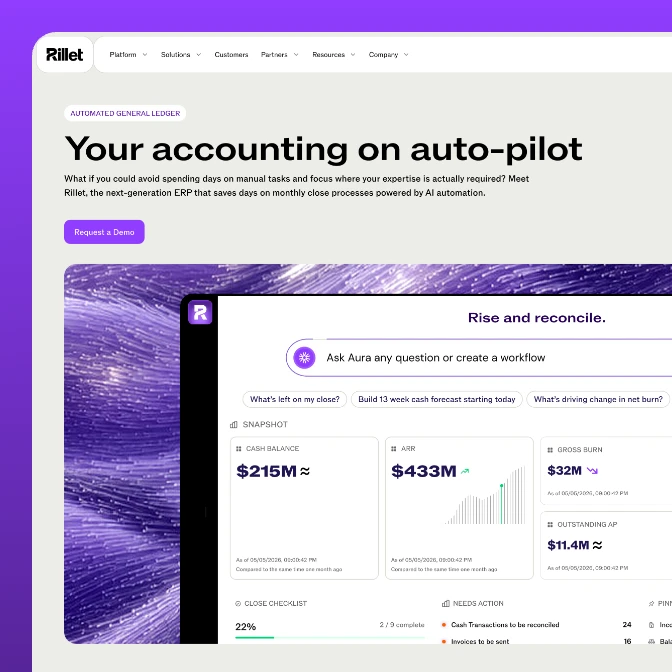
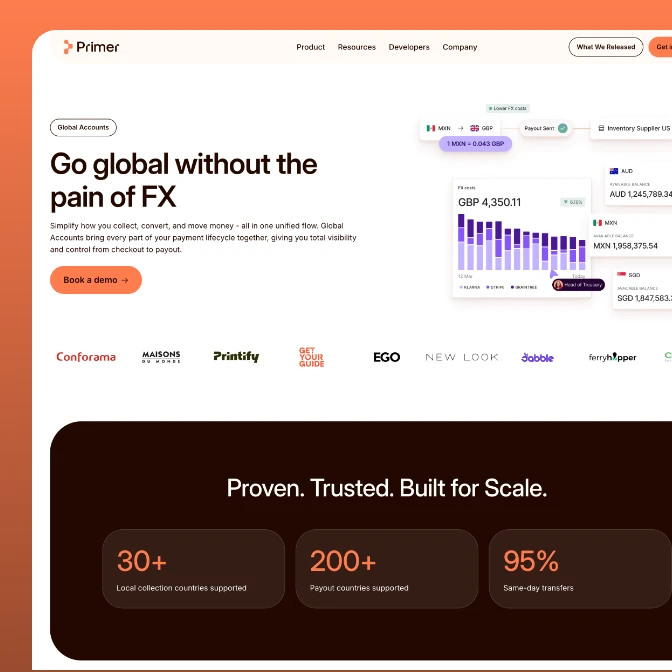
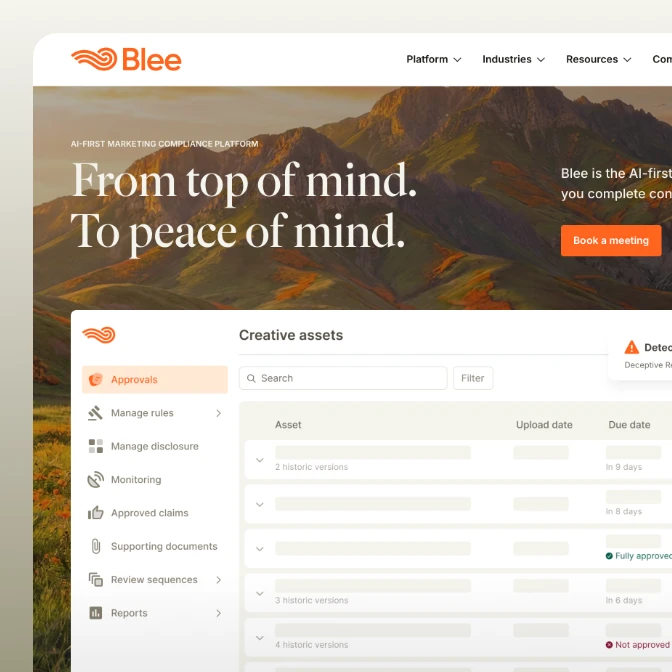
Ecommerce work, with the results attached
We design and build ecommerce for brands that need the store to look as considered as the product inside it. The work below shows the range: brand-led ecommerce design, full design and development, and the conversion outcomes that followed a relaunch.
Pick the cases that match your catalog and your stage.
Why a specialist team, not a freelancer or a template
You have three other ways to build a Webflow and Shopify store. Here's the honest version of each.
| StanVision | DIY / in-house | Freelancer | Typical agency | |
|---|---|---|---|---|
| Custom front-end, not a theme | Yes, brand-led | Template, usually | Varies by person | Often theme-based |
| Webflow + Shopify integration | Built and maintained | DIY, fragile | Hit or miss | Sometimes outsourced |
| Product and inventory sync | Real-time, set up for you | Manual, error-prone | Varies | Varies |
| Built to convert | Designed in | Rarely | Rarely | Sometimes |
| Team can run the store after | Yes, built for it | Yes | Depends on build | Depends on build |
| Stays after launch | Optional retainer | n/a | Rarely | Rarely |
Industries
we go deep in
We specialize where design and growth decisions carry the most weight.
Awards
25 awards from Awwwards, CSS Design Awards, and Behance. And since 2023 Stan sits on the Awwwards jury, which is rarer than winning.
1x SOTD + 1x DEV + 13x HM
1x Jury member

Awwwards: 15 awards in total. 1 Site of the Day (SOTD), 1 Developer Award (DEV) and 13 Honorable Mentions (HM). Stan Kirilov is an Awwwards jury member.
2 SOTD + 4 SK
1x ex. Jury member

CSS Design Awards: 6 awards in total. 2 Sites of the Day (SOTD) and 4 Special Kudos (SK). Stan Kirilov is a former CSS Design Awards jury member.
4x Featured in Web design

Behance: StanVision projects featured 4 times in the Behance Web Design gallery.
Frequently asked questions
Webflow and Shopify ecommerce, answered.
Is Webflow good for ecommerce?
Webflow is excellent for the storefront and weak as the store. Native Webflow ecommerce caps your product count, limits payments to Stripe and PayPal, and has no built-in cart recovery. For a small, design-first catalog it works. For a brand selling at volume, you pair Webflow's front-end with Shopify's commerce engine, which is the setup most design-led brands run.
Can you use Webflow with Shopify?
Yes. Webflow renders the front-end and the brand experience, Shopify holds the products, inventory, payments, and checkout, and a sync layer keeps the two connected so they run as one store. We build and maintain that connection, so it does not become a fragile point of failure later.
Webflow vs Shopify, which one should I use?
Use Shopify alone if selling is the whole business and design is secondary. Use Webflow alone if you are design-led with a small catalog. Use both together if you need a custom-designed brand experience and Shopify's selling power at the same time, which is the common case for growing B2B and DTC brands.
How do you keep products and inventory in sync between Webflow and Shopify?
A real-time sync connects the two, so a change in Shopify (a price, a stock level, a new product) reflects on the Webflow front-end automatically. You manage the store in Shopify, and the site stays current without anyone updating it twice.
Can you migrate my store to Webflow plus Shopify?
Yes, including off native Webflow ecommerce. We move your products and content, rebuild the front-end in Webflow, connect Shopify, and preserve your rankings through the move. See our Webflow migration work for how we hold search performance during a platform change.
How long does a Webflow plus Shopify build take?
Most builds run 10 to 12 weeks. Catalog size, the number of custom templates, and how much migration is involved move the number. We scope it against your actual store in the first step.

Best practices for UX journey mapping
Creating seamless user experiences is more important than ever. UX journey mapping plays a crucial role in understanding how users interact with a product or service, helping businesses identify pain points and opportunities for improvement in the customer experience. A UX journey map is more than just a diagram—it’s a strategic tool that provides insights into user behavior, emotions, and touchpoints throughout their journey. Customer journey maps provide a single source of truth for teams, improving internal alignment. Customer journey mapping tools can help visualize and understand the various stages of the customer journey, offering both simple and advanced options to cater to different user needs and preferences.


Bad website design: the mistakes that drive users away, and how to fix them
Nobody sets out to build a bad website. Teams just stop seeing the mistakes their visitors notice in the first five seconds.


Exploring dark patterns UX: How they affect user experiences
User experience (UX) has become a cornerstone for creating loyal and satisfied customers. However, as competition grows, some companies resort to “dark UX patterns”—design strategies that manipulate user behavior to achieve business objectives, often at the expense of user satisfaction. While these tactics can drive short-term success, they can also lead to long-term issues such as user distrust, regulatory penalties, and damaged brand reputation.

4 Key Design Strategies to Boost Your Website Purchases
From a young age, we are afraid of public speaking. The truth is, you should overcome it by using some tricks, that not only will help you to become a master in it, but people will love watching you.