Your SaaS blog gets traffic. Your pipeline doesn't notice. We're the SaaS SEO agency that fixes that.
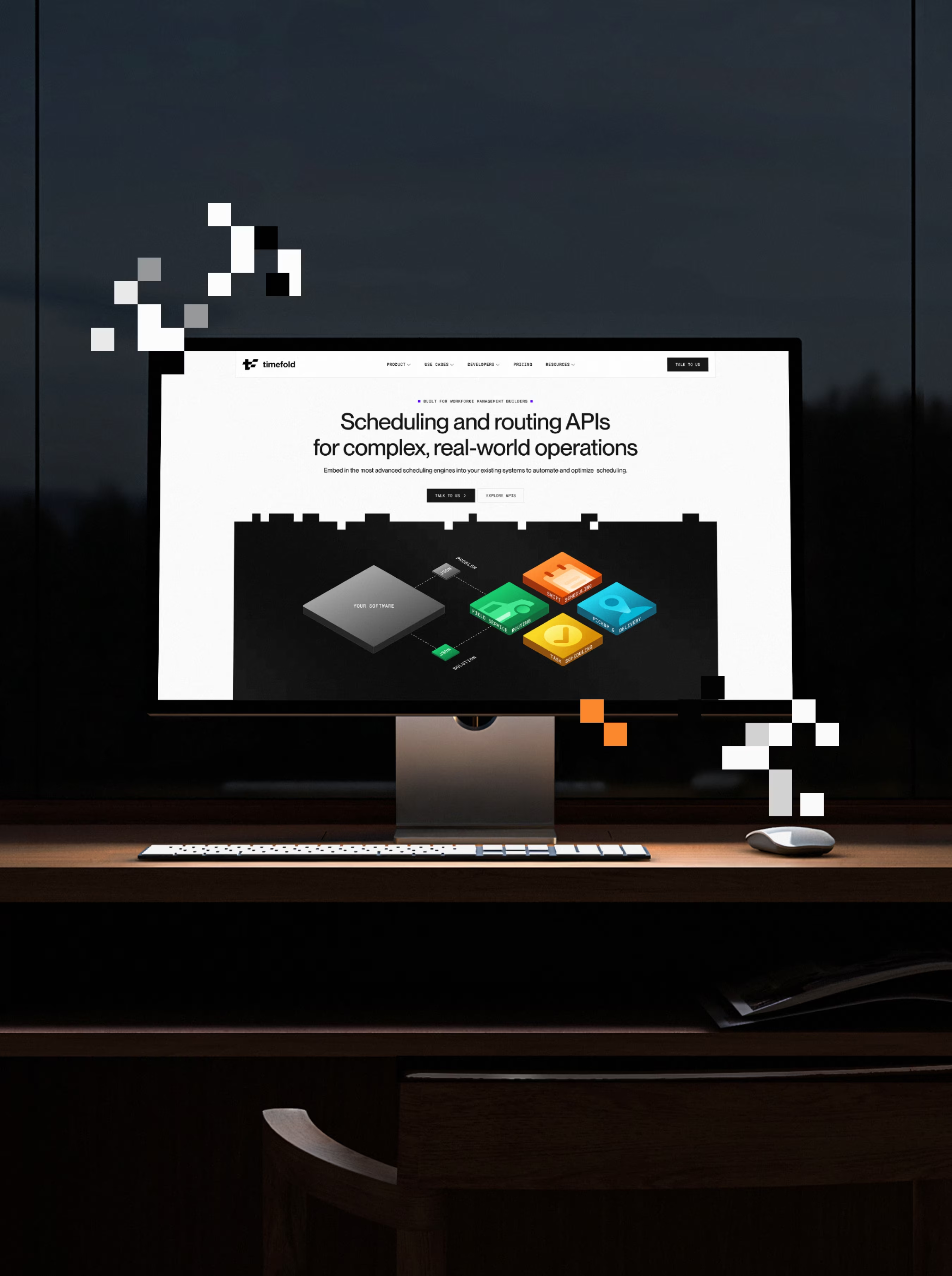
B2B SaaS SEO on any stack: keyword strategy mapped to your funnel, the comparison and alternatives pages buyers search before they book a demo, technical fixes, content, and links, all reported against pipeline instead of sessions. Together with our partner agency BrainDonors, we took Hypergen to 4x more organic leads. After we rebuilt Timefold's site, Google Search clicks rose 15% and traffic from AI assistants rose 130%.
SaaS teams that grow through search with us






















Plenty of traffic, very few demos
Most SaaS SEO programs are busy. Posts go out every week, the traffic chart climbs, and the sales team still can't name a deal that came from search. The work is aimed at the wrong searches. Four patterns come up in almost every audit we run.
Ranking for terms nobody buys from
The blog wins "what is" searches from students and job seekers. The people with budget search "Asana alternatives", "HubSpot vs Salesforce", and "CRM for startups", and you have no page for them.
No pages for buying-stage searches
Buyers compare you before they ever talk to you. When there's no comparison, alternatives, or integration page, a review site or a competitor writes that page for you.
Content that never points at the product
Hundreds of posts, and none link to a pricing, feature, or demo page. All that authority stays on the blog.
Measured in sessions, not pipeline
If SEO reporting stops at traffic, nobody can tell which pages earn their keep. Then the budget gets cut at the first slow quarter.
What our SaaS SEO services cover
SaaS SEO is the work of earning organic search traffic from the people who buy software: keyword strategy built around the funnel, the commercial pages buyers search before a demo, the technical health of the site, content, and links, all measured against pipeline.
We do it on any stack, whether that's WordPress, Webflow, HubSpot CMS, headless, or custom, together with BrainDonors, our partner marketing agency. Their SEO and content specialists and our designers and Webflow developers work as one team, so a fix ships in the next sprint instead of waiting in someone else's backlog. And because our designers build the new pages, they still look like your brand. It's the same team behind our SaaS design work.
SaaS SEO strategy
A keyword map built from your funnel: one primary term per page, every page tied to a buying stage, and a roadmap ordered by revenue potential, not volume.
Commercial pages
Comparison, alternatives, integration, and use-case pages, written for buyers who are already choosing. These are usually the fastest pages to pay back.
Technical SEO
Crawling, indexation, site architecture, internal links, schema, and Core Web Vitals, fixed on whatever your site runs on. On Webflow, this is our Webflow SEO work.
Keyword and competitor research
Where your competitors win search traffic you don't, which of those searches convert, and how hard each one is to take.
Content that ranks and sells
Briefs, writing, and refreshes of posts that are losing ground, each one linking to the product pages it supports.
On-page optimization
Titles, meta descriptions, headings, and answers structured so search engines and buyers both get the point in the first two lines.
Link building
Links from relevant, authoritative sites, including the listicles and roundups buyers and AI engines read when they shortlist vendors.
AI search visibility
Getting cited in ChatGPT, Perplexity, and Google's AI Overviews sits on the same foundation. That side is our answer engine optimization work.
Reporting tied to pipeline
Search Console, GA4, and your CRM connected to a live dashboard you can check any day, so you can see which pages bring in demos and signups. Pages that only bring sessions show up as exactly that.
SaaS SEO vs traditional SEO
The mechanics are the same. What changes is who's searching, what they search for, and what counts as a win. Here's where SaaS SEO actually differs.
| SaaS SEO | Traditional SEO | |
|---|---|---|
| Who's searching | A buying committee comparing tools over weeks or months | One person looking for an answer, a product, or a local service |
| Pages that matter most | Comparison, alternatives, integration, use-case, and pricing pages | Category, product, and blog pages |
| What success means | Demos, trials, and pipeline from organic | Rankings and traffic |
| Content focus | Problems your product solves, at every stage of the funnel | High-volume informational topics |
| Keyword difficulty | Low-volume, high-intent terms that convert at a much higher rate | Big head terms worth winning on volume alone |
| AI search | Shortlists form inside ChatGPT and Perplexity, so citations matter | Still mostly classic results |
How we run SaaS SEO
The order matters more than the effort. Strategy comes before content, and the baseline comes before anything changes.
Results our clients reached
Real business milestones the teams we partnered with hit during the engagement. The work is ours; the wins are theirs.
$200M+
Raised at a $1B valuation. All three rounds closed after our redesign went live.
$175M
Raised while scaling its global payment infrastructure.
$13M
Raised while building its AI planning platform.

$73M
Combined value of the SMSBump and NitroPack exits.
Average partnership
3+ years
Average length of a client partnership. People stay when the work keeps shipping.
8 years
And counting, across strategy, branding, and product.
AI portfolio
15+ companies
AI companies designed for, from first launch to scale.
Enterprise portfolio
10+ clients
Enterprise clients, the kind with procurement departments.
24%
Higher conversion rate after the website relaunch.
18%
Lower bounce rate, one month after launch.
Products launched
10+
Software products designed and taken to market with our clients.
SaaS sites that grew through search
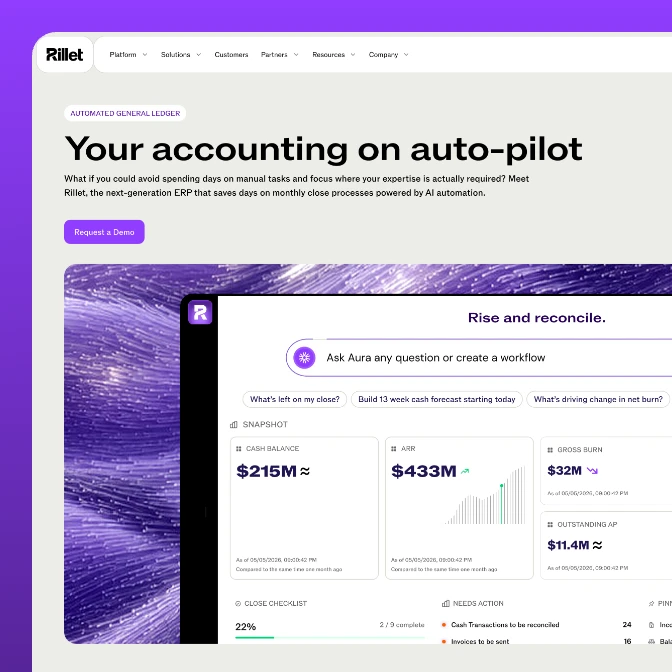
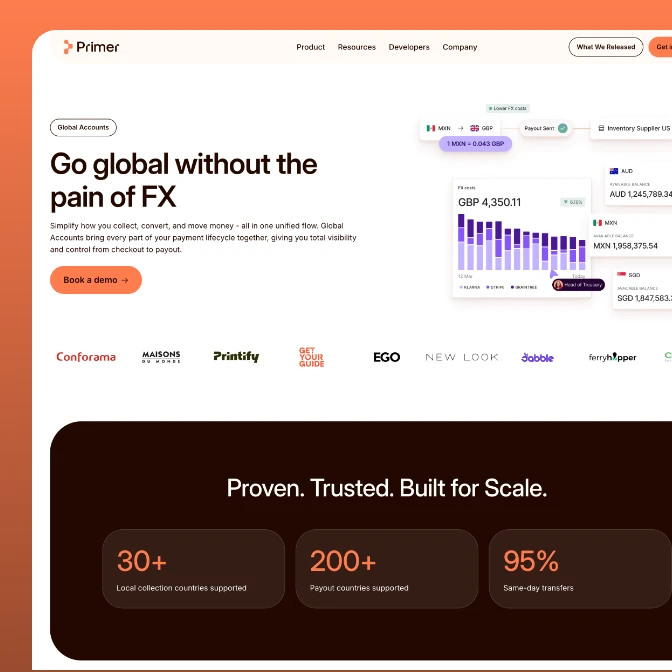
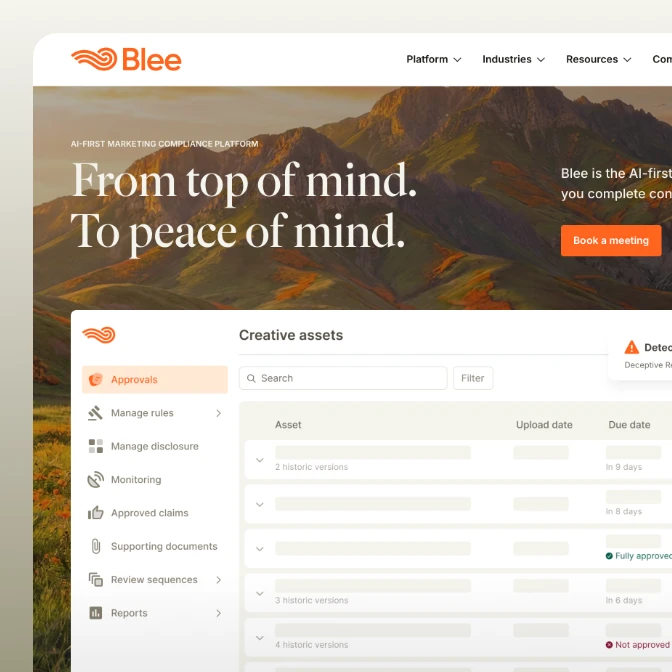
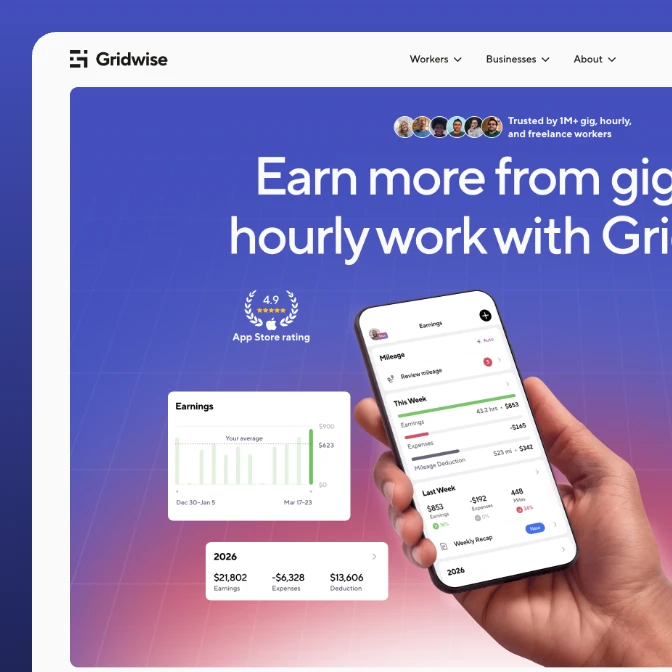
Most of our SEO work happens on sites we also design and build, so the proof below runs on Webflow. The SEO behind it works the same on any platform. Blee's organic search traffic more than tripled in the seven weeks after launch. Primer's organic search traffic has grown 2.3x since its relaunch. Timefold held every ranking through its move off Craft CMS, then grew Google Search clicks 15% in the first month. With BrainDonors, CatalystPay, a payments provider, cut technical site errors by 99%, doubled its search impressions, and grew organic clicks 30%, and Hypergen's organic leads grew 4x.
4.6x
more inbound form submissions
7x
higher visit-to-lead rate
200+
pages migrated off Craft CMS

3x
organic search traffic after launch
90%
total session growth in seven weeks
54%
more direct traffic after the rebrand
58%
more sessions in the first two months after launch
2x
total traffic two years on, with almost no paid spend
2.3x
organic search traffic since the relaunch
Why a SaaS SEO agency, not a generic one
Most B2B SEO agencies can run an audit. The difference is what happens after it, and whether the people doing the work understand how software gets bought.
| StanVision | Generic B2B SEO agency | Freelancer | In-house | |
|---|---|---|---|---|
| Knows how SaaS gets bought | B2B SaaS is our core client base, from seed stage to enterprise | Mixed client list, SaaS is one vertical of many | Varies, and it's hard to verify | Knows your product best, rarely sees other SaaS funnels |
| Who implements the fixes | We do, on your stack, in the same team | You do. Findings go into your dev queue | Often a separate bill | You do, when the roadmap allows it |
| Design and development included | Strategy, content, design, and development in one team | SEO only. Pages need another vendor | Usually one discipline | Depends on headcount |
| What gets reported | Pipeline, signups, and demos by page | Rankings and traffic | Rankings | Whatever the tools show by default |
| AI search | Built in, with a dedicated AEO practice | Sometimes, as an add-on | Rarely | Rarely |
| Cost shape | Retainer, scoped to the audit | Retainer, reporting included whether or not things move | Lowest rate. Capacity varies | A salary, plus tools, plus ramp-up |
Industries
we go deep in
We specialize where design and growth decisions carry the most weight.
Awards
25 awards from Awwwards, CSS Design Awards, and Behance. And since 2023 Stan sits on the Awwwards jury, which is rarer than winning.
1x SOTD + 1x DEV + 13x HM
1x Jury member

Awwwards: 15 awards in total. 1 Site of the Day (SOTD), 1 Developer Award (DEV) and 13 Honorable Mentions (HM). Stan Kirilov is an Awwwards jury member.
2 SOTD + 4 SK
1x ex. Jury member

CSS Design Awards: 6 awards in total. 2 Sites of the Day (SOTD) and 4 Special Kudos (SK). Stan Kirilov is a former CSS Design Awards jury member.
4x Featured in Web design

Behance: StanVision projects featured 4 times in the Behance Web Design gallery.
Frequently asked questions
SaaS SEO questions, answered.
What does a SaaS SEO agency do?
A SaaS SEO agency grows a software company's organic search traffic from the people likely to buy. That covers keyword strategy mapped to the funnel, technical SEO, commercial pages like comparisons and alternatives, content, link building, and reporting tied to demos and signups. The good ones also implement the fixes, instead of leaving them for your developers.
What is SaaS SEO?
SaaS SEO is search engine optimization for software companies: earning organic traffic that turns into trials, demos, and revenue. It differs from general SEO in its targets. It prioritizes buying-stage searches like "alternatives to" and "vs" comparisons over high-volume informational topics, and it's judged on pipeline instead of traffic.
How do you improve SEO for a SaaS company?
Start with the pages closest to revenue. Fix the technical issues that stop them being crawled and indexed, map one target keyword to each page, and build the comparison, alternatives, and integration pages buyers search before a demo. Then link your blog content to those pages, so the authority it earns flows to the pages that sell. If your site runs on Webflow, our Webflow SEO page covers the platform side.
How important is SEO for a SaaS business?
Very, because it's the one acquisition channel whose cost per lead tends to fall over time. Paid traffic stops the day the budget does. A page that ranks for a buying-stage search keeps bringing in qualified visitors for years. For most B2B SaaS companies, it's also where buyers start their research before they ever contact sales.
How do you build an SEO strategy for a SaaS product?
Work backward from revenue. List the problems your product solves and the alternatives buyers compare you with. Research the searches behind each one, and group them by funnel stage. Give every page one primary keyword, start with the buying-stage pages, then plan supporting content that links up to them. Review the plan every quarter against which pages actually produce demos.
How do you choose a SaaS SEO agency?
Ask three things. Can they show results for SaaS companies measured in signups or pipeline, not just traffic? Do they implement fixes themselves, or hand you a findings document? Do they build commercial pages like comparisons and alternatives, or only blog posts? An agency that understands SaaS answers all three with examples.
How do you attribute revenue to SEO in SaaS?
Connect Search Console, your analytics, and your CRM so every signup and demo request carries the landing page it started on. Then report by page: which pages bring in organic visitors who convert, and at what rate. First-touch and assisted conversions together give the fairest picture, because SaaS buyers rarely convert on their first visit.
How do you optimize SaaS pricing pages for SEO?
Make the pricing page crawlable and indexable, give it a title and description that name your product and "pricing", and put plan details in HTML text, not images or scripts. Add an FAQ for the buying questions (billing, trials, limits) with FAQ schema, and link to it from comparison and feature pages. Searches for your product name plus "pricing" are some of the highest-intent visits you'll get.
Does AEO matter more than SEO for SaaS growth?
No, they work together. Answer engine optimization helps AI assistants cite you, and the pages AI tools cite are usually the ones that already rank well in search. Get the SEO foundation right first, then structure your pages so ChatGPT, Perplexity, and AI Overviews can quote them. Our answer engine optimization work covers that second part.