Your brand stopped matching your product. That's what a B2B branding agency fixes
We're a B2B branding agency for SaaS and software companies. We rebuild the strategy, the identity, and the system that keeps both consistent everywhere you show up: website, product, sales deck, and pitch.

Companies that trusted us with their brand

















A rebrand fails when it stops at a new logo
You raised a round, shipped new products, and moved upmarket. The brand didn't move with you. Now the website says one thing, the deck says another, and the product UI looks like it belongs to a different company.
This is rarely a logo problem. It's a brand strategy problem: there is no single, written definition of what the company stands for, so every team renders the brand a little differently and the company reads as five companies instead of one.
The brand reads younger than the company
You're selling to enterprise buyers, but the brand still looks like the seed-stage version of you. It quietly undercuts the price you're trying to charge.
Nothing matches across touchpoints
The site, the deck, the app, and the social posts each use their own colors, type, and tone. Buyers register the inconsistency even when they can't name it.
You can't explain what makes you different
The category got crowded and your messaging blends in with every competitor's. Positioning was never written down, so the sales team improvises it on every call.
Design slows the whole company down
With no shared brand system, every new page, deck, and feature starts from a blank file and a debate. Output is inconsistent and slow.
What a B2B branding agency actually delivers
A B2B branding agency defines what a company stands for and builds the system that expresses it consistently across every touchpoint. That work has three layers: brand strategy (the positioning and messaging that decide what you say), brand identity (the visual system that decides how you look), and the operating system that keeps both intact as the company grows.
We deliver all three, then ship them into the places buyers actually see: your site, your product, and your pitch. For SaaS and software teams, the test isn't a pretty logo. It's whether the brand still holds when it hits the product UI and the enterprise sales cycle.
Brand strategy and positioning
We define who you're for, what you stand against, and the one thing you own in the category. This is the foundation every other decision hangs on.
Messaging and voice
A core narrative, value propositions, and a tone the whole team can write in, so the brand sounds like one company on the site, the deck, and the support inbox.
Brand identity system
The visual language: logo, type, color, layout, motion, and imagery, built as a connected system rather than a set of one-off assets.
Logo and wordmark
A mark that works at favicon size and on a conference banner, designed to carry the positioning, not just decorate it.
Brand guidelines
The rules that keep the brand consistent after we leave: usage, do's and don'ts, and ready-to-use components your team can apply without asking us.
Pitch and sales deck design
The brand applied to the highest-stakes document you own. The deck that raises the round and closes the enterprise deal looks like the company you're becoming.
Website that ships the brand
The brand only counts where buyers see it, so we build it into the site in Webflow web design, not just a PDF nobody opens.
Brand-to-product consistency
We connect the brand to the product through a shared design system, so the marketing site and the app stop looking like two different companies.
Rebrand rollout
A staged plan to move from the old brand to the new one across the site, product, and collateral without a confusing half-rebranded period in between.
How a B2B rebrand runs, step by step
A full rebrand runs 10 to 12 weeks. The order matters: strategy before identity, identity before rollout. Skipping the first step is how companies end up with a logo they like and a brand that still doesn't mean anything.
Results our clients reached
Real business milestones the teams we partnered with hit during the engagement. The work is ours; the wins are theirs.

$200M+
Raised at a $1B valuation, all three rounds landing after our redesign went live.

$170M
Raised while scaling its global payment infrastructure platform.

$13M
Raised while expanding into a category-leading AI planning platform.

$73M
Combined acquisition value across client exits.

8 years
One of our longest partnerships, spanning strategy, branding, and digital products.

24%
Increase in conversion rate following the website relaunch.

18%
Reduction in bounce rate one month after launch.
Branding case studies that deliver real results
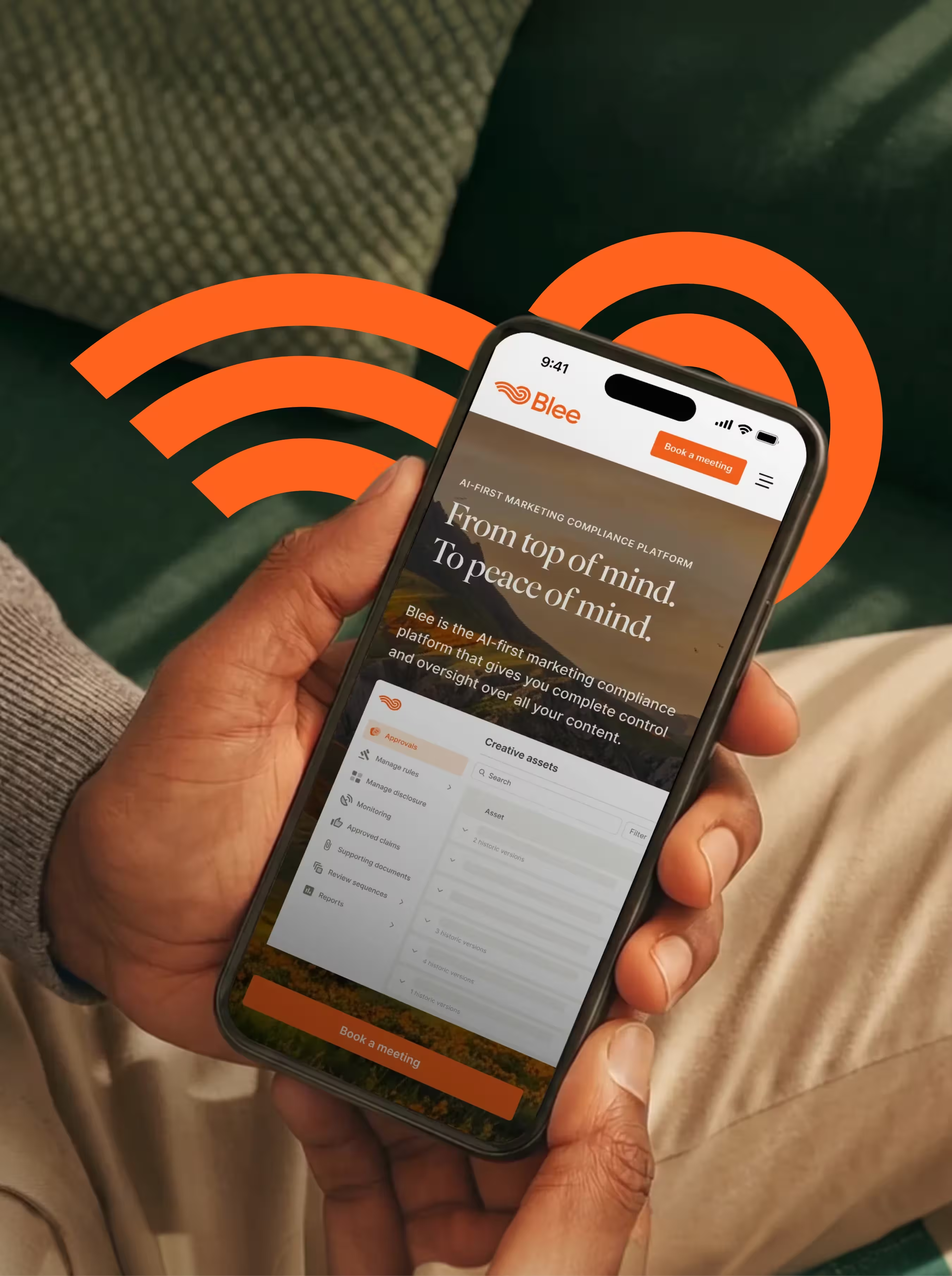
The companies below came to us with the same gap: the business had outgrown the brand. We rewrote the positioning, rebuilt the identity, and shipped both into the site and product. Each one moved upmarket, raised, or scaled on the brand we built with them.
The work here spans SaaS, fintech, and AI, so look for the engagement closest to your stage and category.
3x
organic search traffic after launch
90%
total session growth in seven weeks
54%
more direct traffic after the rebrand
70%
more qualified merchant leads after launch
55%
higher brand trust in partner feedback
0→1
brand, voice, and website built from scratch
83%
more product sign-ups after launch
44%
longer time on site
4
months from blank slate to brand and live site
Four ways to get this done. The honest version
Most teams weighing this work are choosing between four options: a specialized partner like us, a typical agency, a freelancer, or a new in-house hire.
Here's where each one actually wins, including the rows where we don't.
65 awards and recognitions


Industries
we go deep in
We specialize where design and growth decisions carry the most weight.
Frequently asked questions
Learn more about our process, expertise, and how we help businesses succeed.
What does a B2B branding agency do?
A B2B branding agency defines a company's positioning and builds the visual and verbal system that expresses it across every touchpoint. The work covers brand strategy (what you stand for and say), brand identity (how you look), and the guidelines that keep both consistent. For software companies, it extends into the product UI and the sales deck, not just the marketing site.
What's the difference between brand strategy and brand identity?
Brand strategy is the thinking: your positioning, audience, and message, the decision about what the company stands for. Brand identity is the expression: the logo, type, color, and visual system that make that strategy visible. Strategy comes first. An identity built without it looks good and means nothing, which is why a logo redesign alone rarely fixes a brand problem.
How do you choose a B2B branding agency?
Look for three things: real positioning work (not just visual design), proof in your category and at your stage, and a process that ships the brand into your site and product rather than handing you a PDF. Ask to see the strategy work behind a project, not only the final logo. An agency that can only show pretty marks skipped the part that matters.
When should a B2B or SaaS company rebrand?
The clearest triggers are a move upmarket, a new round, a product or category shift, a merger, or a brand that has visibly fallen behind the company. The signal to watch for: when the brand starts undercutting the price you're trying to charge or the buyer you're trying to win, the cost of staying put is higher than the rebrand.
How long does a rebrand take?
A full B2B rebrand runs 10 to 12 weeks: roughly two weeks of audit and positioning, two of strategy and messaging, four of identity design, and the rest on the system and rollout. Smaller scopes (a refresh, a deck, an identity-only project) run shorter.
How much does branding cost?
Cost depends on scope: a full strategy-plus-identity rebrand is a different number from a refresh or a single deliverable. Tell us what you need on the contact page and we'll give you a real range, not a generic price list.





.svg)